Mastering Multi-Tenant Cloud Architecture for Scalable SaaS
Learn how multi-tenant cloud architecture can transform your SaaS platform by enabling scalability, cost efficiency, and robust data isolation. Discover the key strategies for building a successful multi-tenant system that serves thousands of customers while maintaining security and compliance.

Zakariae
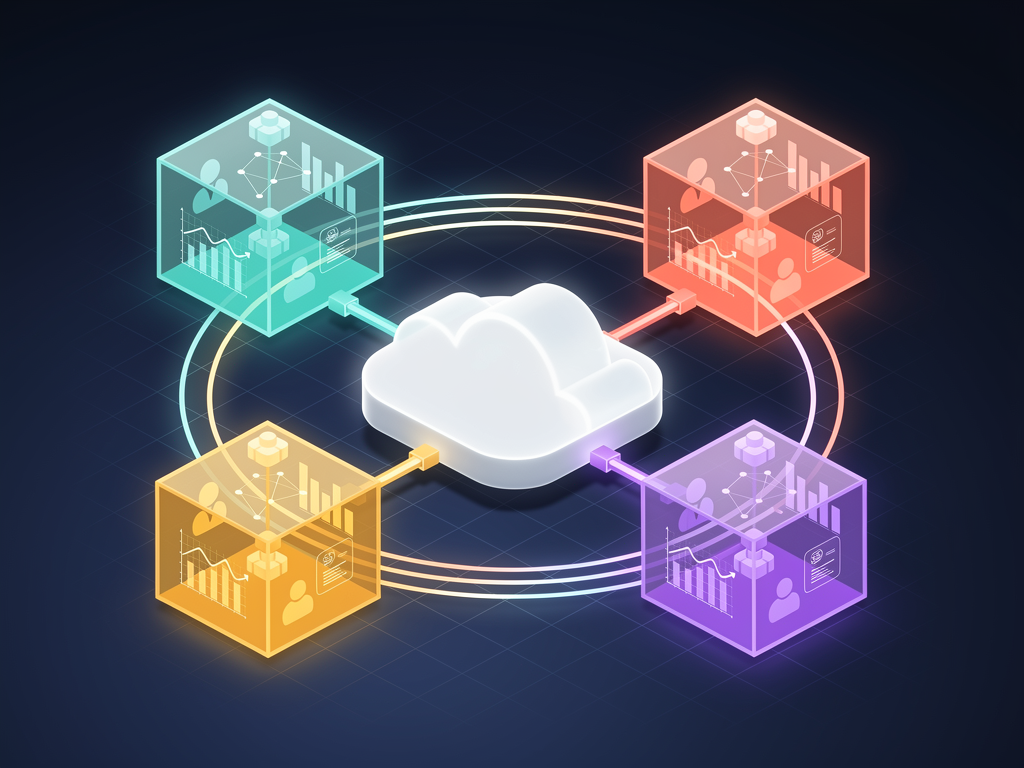
Building a successful software as a service platform requires more than just great code and a compelling value proposition. The architectural decisions you make in the early stages of development will determine whether your platform can scale to serve thousands of customers or collapse under the weight of its own complexity. For SaaS entrepreneurs, no-code platform developers, and technical founders alike, understanding tenant cloud architecture is not optional: it is foundational to long-term success.
Multi-tenant architecture represents the backbone of modern SaaS platforms, enabling a single application instance to serve multiple customers while maintaining strict data isolation and security. This approach has powered the growth of industry giants like Salesforce, Slack, and Shopify, and it remains the most cost-effective way to deliver software at scale. Whether you are building an app builder tool, a white-label solution for agencies, or a subscription platform for React developers, mastering multi-tenant cloud architecture will give you a significant competitive advantage.
Key Takeaways
- Multi-tenant architecture allows one application instance to serve multiple customers, dramatically reducing infrastructure costs and simplifying maintenance.
- Tenant isolation is critical for security and compliance, requiring careful implementation at the database, application, and network layers.
- Choosing the right tenancy model (shared, siloed, or hybrid) depends on your target market, compliance requirements, and scalability goals.
- Custom domains and subdomains enhance the white-label experience and are essential for B2B SaaS platforms serving agencies and enterprises.
- Infrastructure as code and automated provisioning are non-negotiable for scaling tenant onboarding efficiently.
- Observability and monitoring must be tenant-aware from day one to troubleshoot issues and optimize performance across your customer base.
- Starting with a proven foundation like a multi-tenant boilerplate can save hundreds of development hours and reduce architectural mistakes.
Understanding Multi-Tenant Architecture Fundamentals
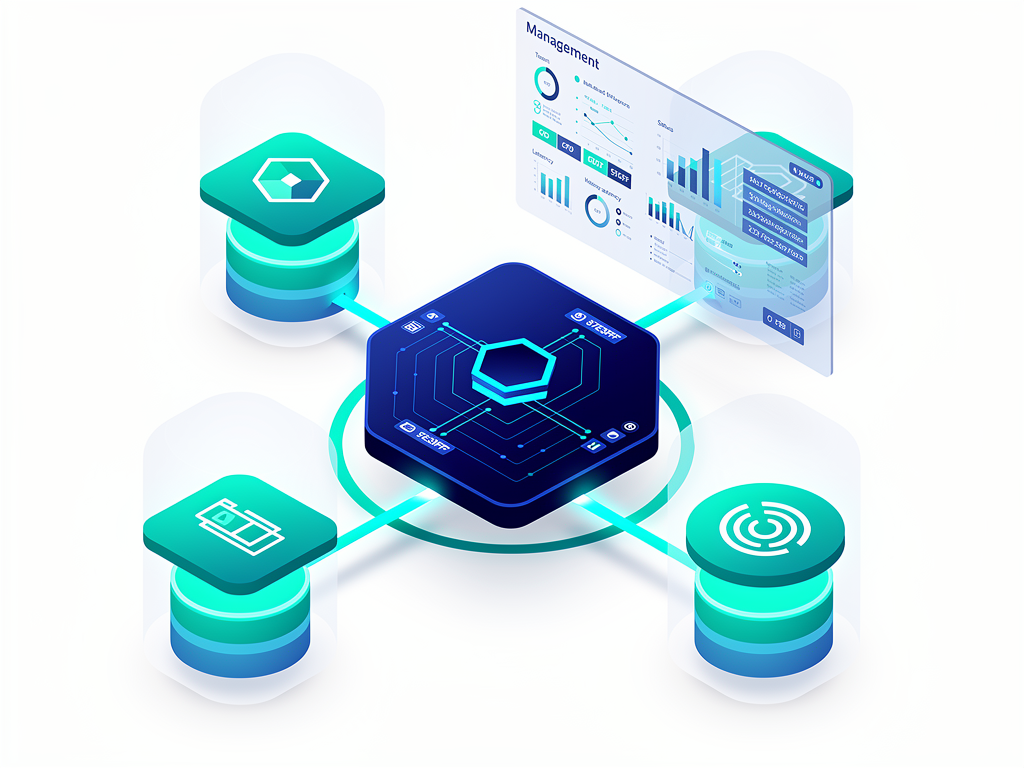
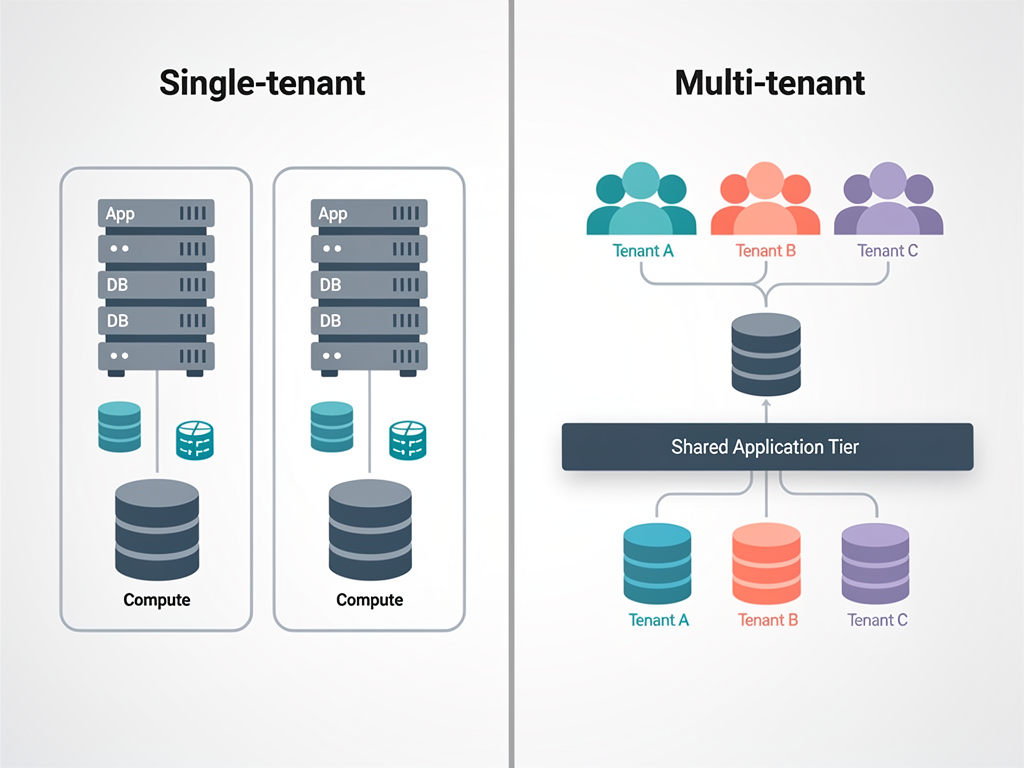
Multi-tenant architecture is a software design pattern where a single instance of an application serves multiple customers, commonly referred to as tenants. Each tenant operates within their own isolated environment, accessing shared computing resources while maintaining complete separation of their data and configurations. This model contrasts sharply with single-tenant deployments, where each customer receives a dedicated application instance and infrastructure.
The fundamental principle behind multi-tenancy is resource pooling. Instead of provisioning separate servers, databases, and application instances for each customer, a multi-tenant system consolidates these resources into a shared pool. This consolidation delivers significant cost savings, as infrastructure expenses are distributed across the entire customer base rather than duplicated for each individual tenant.
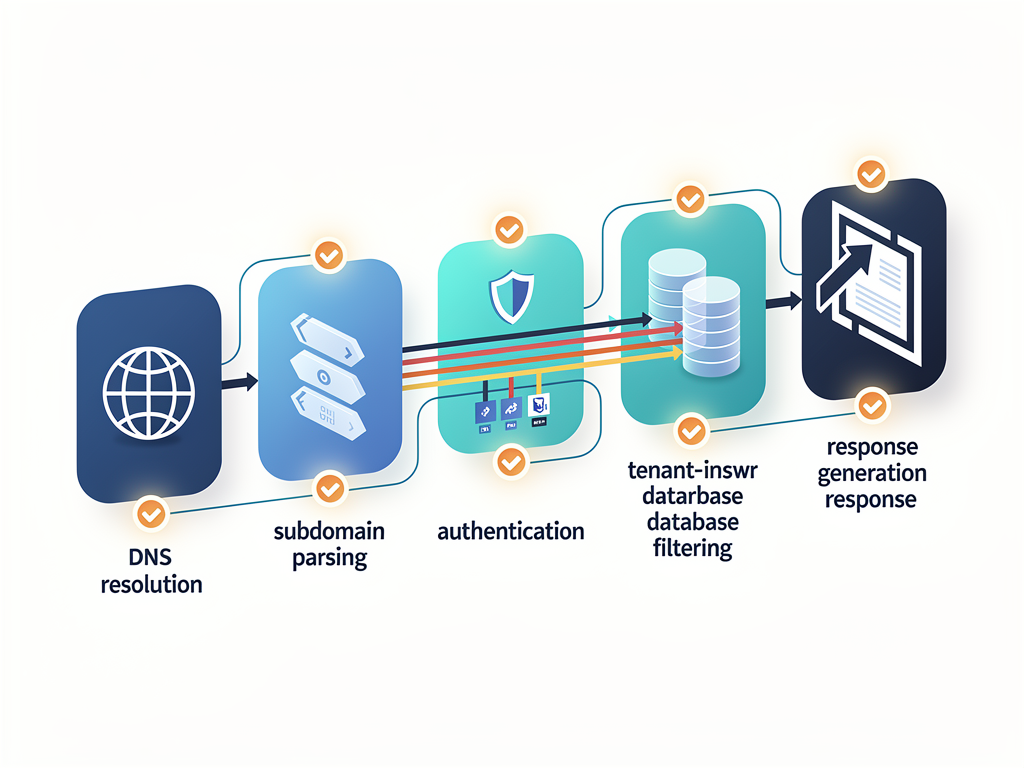
From a technical perspective, multi-tenant systems must address several core challenges. First, they must implement robust tenant identification mechanisms that determine which tenant a request belongs to, typically through subdomain parsing, authentication tokens, or request headers. Second, they must enforce data isolation to prevent any possibility of one tenant accessing another tenant's information. Third, they must manage resource allocation to ensure fair usage and prevent any single tenant from monopolizing shared resources.
The benefits of this architecture extend beyond cost savings. Multi-tenant systems simplify maintenance because updates and patches need only be applied once to affect all tenants simultaneously. This unified codebase approach accelerates feature deployment and reduces the operational burden on development teams. Additionally, multi-tenant platforms can leverage economies of scale for monitoring, security, and compliance, implementing these capabilities once and applying them uniformly across all customers.
Understanding these fundamentals is essential for any technical founder or SaaS entrepreneur. The architectural decisions you make regarding multi-tenancy will ripple through every aspect of your platform, from database design to API structure to billing systems. Getting these foundations right from the start prevents costly rewrites and enables sustainable growth as your customer base expands.
Comparing Single-Tenant and Multi-Tenant Approaches
Before committing to a multi-tenant architecture, it is important to understand the trade-offs between different tenancy models. Each approach offers distinct advantages and limitations that may make it more or less suitable for your specific use case and target market.
Single-tenant architecture provides maximum isolation and customization. Each customer operates in their own dedicated environment, with separate infrastructure, databases, and application instances. This model is ideal for enterprise customers with strict compliance requirements, those who need deep customization, or industries where data sovereignty regulations mandate physical separation. However, single-tenancy comes with significant drawbacks: infrastructure costs scale linearly with customer count, maintenance becomes increasingly complex as the number of instances grows, and onboarding new customers requires provisioning entirely new environments.
| Characteristic | Single-Tenant | Multi-Tenant | Hybrid |
|---|---|---|---|
| Infrastructure Cost | High (scales linearly) | Low (shared resources) | Medium (varies by tier) |
| Data Isolation | Physical separation | Logical separation | Configurable |
| Customization | Unlimited | Limited to configuration | Tier-dependent |
| Maintenance Complexity | High (multiple instances) | Low (single codebase) | Medium |
| Onboarding Speed | Slow (new provisioning) | Fast (existing infrastructure) | Varies |
| Scalability | Limited by operations | Highly scalable | Flexible |
Multi-tenant architecture optimizes for efficiency and scalability. By sharing infrastructure across all customers, this model dramatically reduces per-customer costs and simplifies operations. New tenants can be onboarded in minutes rather than days, and updates propagate instantly to the entire customer base. The primary challenges involve implementing robust isolation mechanisms and managing the noisy neighbor problem, where one tenant's heavy usage could potentially impact others.
Hybrid approaches combine elements of both models to serve diverse customer segments. A typical hybrid architecture might serve standard customers through a shared multi-tenant environment while offering dedicated instances for enterprise clients willing to pay a premium. This flexibility allows SaaS providers to capture both ends of the market without maintaining entirely separate products. The trade-off is increased architectural complexity, as the codebase must support both deployment modes.
For most SaaS startups and no-code platform developers, multi-tenant architecture represents the optimal starting point. It provides the cost efficiency needed during early growth stages and the scalability required as the customer base expands. Enterprise features like dedicated instances can be added later as market demand justifies the additional complexity.
Database Strategies for Multi-Tenant Systems
The database layer is where multi-tenant architecture decisions have the most significant impact on security, performance, and operational complexity. Choosing the right database strategy requires balancing isolation requirements against cost efficiency and maintenance overhead.
Shared database with shared schema represents the most cost-efficient approach. All tenants share a single database and tables, with a tenant identifier column distinguishing records belonging to different customers. This model minimizes infrastructure costs and simplifies maintenance, but requires rigorous application-level enforcement to prevent data leakage. Every query must include tenant filtering, and developers must be vigilant about never exposing data across tenant boundaries.
Shared database with separate schemas provides stronger isolation while maintaining reasonable cost efficiency. Each tenant receives their own database schema within a shared database instance, creating logical separation at the database level. This approach simplifies certain compliance requirements and makes tenant-specific backups and data exports more straightforward. However, schema management becomes more complex as the number of tenants grows, and database migrations must be applied across all schemas.
Separate databases per tenant offers the highest level of isolation. Each tenant's data resides in a completely separate database instance, providing physical separation that satisfies the strictest compliance requirements. This model simplifies data portability and enables tenant-specific performance tuning, but significantly increases infrastructure costs and operational complexity. Managing hundreds or thousands of separate database instances requires sophisticated automation and monitoring.
Best Practice: Start with a shared database approach using tenant ID columns, but design your data access layer to abstract the isolation mechanism. This allows you to migrate specific tenants to dedicated databases later without rewriting application code.
Implementing effective database isolation requires attention to several key areas. Row-level security policies can enforce tenant filtering at the database level, providing an additional safety net beyond application code. Connection pooling strategies must account for tenant context, either through connection-per-tenant approaches or by setting tenant context on each connection. Query optimization should consider tenant ID as a primary index component to ensure efficient filtering across large datasets.
Modern database platforms like PostgreSQL offer powerful features for multi-tenant implementations. Row-level security policies can automatically filter queries based on session variables, ensuring that even direct database access respects tenant boundaries. Partitioning strategies can organize data by tenant for improved query performance and simplified maintenance operations. These capabilities make PostgreSQL an excellent choice for multi-tenant SaaS platforms, which is why it serves as the foundation for many production systems.
Implementing Tenant Isolation at the Application Layer
While database isolation protects data at rest, application-layer isolation ensures that tenant boundaries are respected throughout the entire request lifecycle. Every component of your application stack must be tenant-aware, from the initial request routing through business logic execution to response generation.
Tenant context resolution is the first critical step in any request. The application must determine which tenant a request belongs to before any business logic executes. Common resolution strategies include subdomain parsing (where tenant1.yourplatform.com identifies the tenant), authentication token claims (where the JWT includes tenant information), request headers (for API integrations), or path-based routing (where /tenant1/api/resource identifies the tenant). The chosen strategy should be consistent across all entry points and resistant to manipulation.
Once tenant context is established, it must be propagated throughout the request. This typically involves storing the tenant identifier in request-scoped storage (like async local storage in Node.js applications) and ensuring that all downstream operations, including database queries, cache access, and external service calls, include the appropriate tenant context. Middleware patterns work well for this purpose, establishing context early in the request pipeline and making it available to all subsequent handlers.
Service-level isolation extends tenant awareness to background jobs, scheduled tasks, and asynchronous operations. When a job is queued, it must capture the tenant context and restore it during execution. Message queues should include tenant identifiers in message metadata, and job processors should validate tenant context before performing any operations. Failing to maintain tenant context in asynchronous flows is a common source of data leakage bugs.
Authentication and authorization systems require special attention in multi-tenant environments. Users may belong to specific tenants, have roles within those tenants, and possess permissions that vary by tenant context. A robust tenant-aware permission system must validate not only that a user is authenticated but also that they have appropriate access to the specific tenant and resources they are requesting. This often involves multiple layers of authorization checks: platform-level permissions, tenant membership, and resource-level access control.
For developers building with modern frameworks, implementing these patterns from scratch can be time-consuming and error-prone. A well-designed Next.js boilerplate with built-in multi-tenant support can provide these isolation mechanisms out of the box, allowing teams to focus on their unique value proposition rather than reinventing foundational infrastructure.
Custom Domains and Subdomain Management
For B2B SaaS platforms and white-label solutions, custom domain support is often a critical feature that differentiates professional offerings from basic tools. Allowing tenants to use their own domains (like app.clientcompany.com) or branded subdomains creates a seamless experience that strengthens client relationships and enables premium pricing tiers.
Subdomain-based multi-tenancy is the most common approach for SaaS platforms. Each tenant receives a unique subdomain (like tenant1.yourplatform.com), which serves as both their access point and their tenant identifier. This approach requires wildcard DNS configuration and wildcard SSL certificates, but provides a clean separation between tenants without requiring complex domain management. Subdomain parsing in the application layer extracts the tenant identifier from the hostname and establishes the appropriate context.
Custom domain support adds significant complexity but delivers substantial value for enterprise customers. Implementing custom domains requires several components working together: a domain verification system (typically using DNS TXT records), SSL certificate provisioning (usually through Let's Encrypt or similar automated certificate authorities), and a reverse proxy or load balancer that can route requests based on hostname. The application must maintain a mapping between custom domains and tenant identifiers, looking up the appropriate tenant context for each incoming request.
SSL certificate management deserves particular attention. Modern browsers require HTTPS for virtually all functionality, and users expect secure connections by default. Automated certificate provisioning using the ACME protocol (implemented by Let's Encrypt) enables on-demand certificate generation for custom domains. However, this requires proper DNS configuration by the tenant and may involve rate limiting considerations for platforms with many custom domains. Certificate renewal must be automated and monitored to prevent service disruptions.
The technical implementation of custom domains typically involves several layers:
- DNS configuration: Tenants point their domain to your platform via CNAME or A records
- Domain verification: Your platform confirms domain ownership through DNS challenges
- Certificate provisioning: Automated SSL certificate generation and installation
- Request routing: Load balancer or reverse proxy maps domains to tenant contexts
- Application resolution: Application layer validates domain and establishes tenant context
For platforms targeting web agencies building white-label solutions, custom domain support is often a make-or-break feature. Agencies need to deliver branded experiences to their clients, and visible platform branding undermines the white-label value proposition. Investing in robust custom domain infrastructure early pays dividends as you scale into the agency and enterprise markets.
Scaling Strategies for Multi-Tenant Platforms
Scalability is one of the primary advantages of multi-tenant architecture, but realizing that advantage requires deliberate design decisions and ongoing optimization. As your tenant count grows, different components of your system will face different scaling challenges, each requiring appropriate strategies.
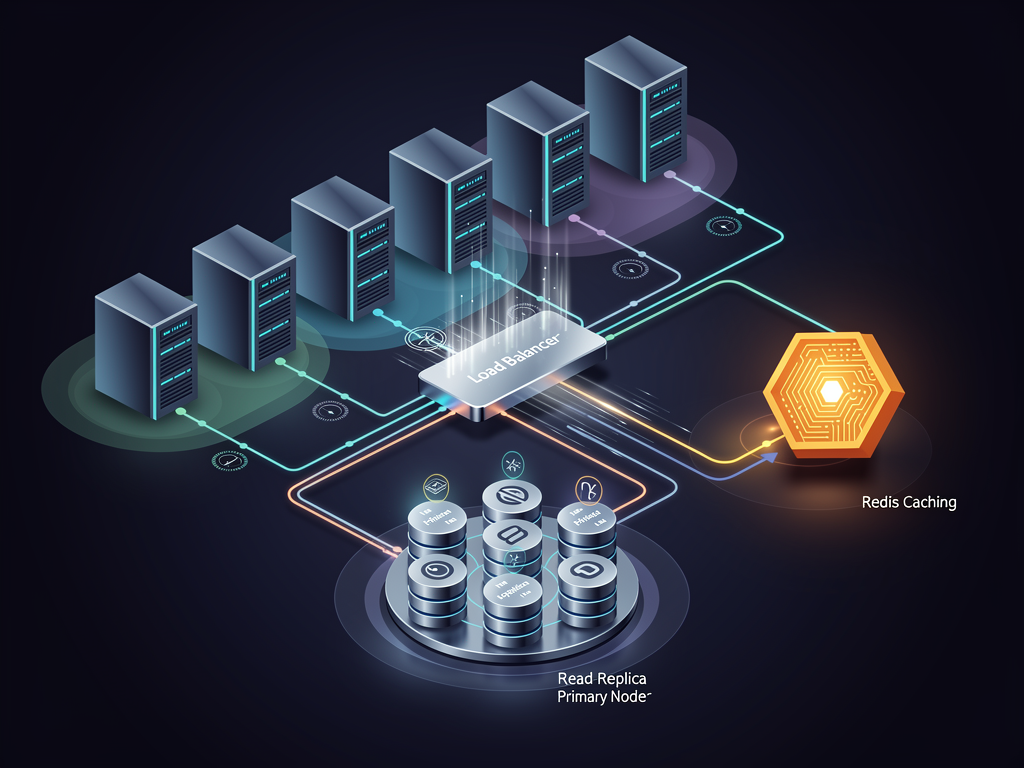
Horizontal scaling at the application layer is typically straightforward for well-designed multi-tenant systems. Stateless application servers can be added behind a load balancer to handle increased request volume. The key requirement is that all application state (including tenant context) must be derived from the request itself or retrieved from shared storage, never stored locally on individual servers. Session data, cached computations, and temporary files must all reside in shared infrastructure like Redis or distributed file systems.
Database scaling presents more complex challenges. Read replicas can distribute query load across multiple database instances, but write operations must still route to the primary database. For read-heavy workloads common in many SaaS applications, this approach provides significant headroom. Connection pooling becomes critical as tenant count grows, as each tenant potentially requires database connections across multiple application servers. Tools like PgBouncer for PostgreSQL can manage connection pools efficiently, reducing database server load.
The noisy neighbor problem occurs when one tenant's heavy usage impacts the performance experienced by other tenants. Mitigation strategies include:
- Rate limiting: Enforce per-tenant request limits to prevent any single tenant from overwhelming shared resources
- Resource quotas: Limit storage, compute, or API calls based on subscription tier
- Query timeouts: Terminate long-running database queries to prevent resource monopolization
- Tenant prioritization: Implement quality-of-service mechanisms that prioritize premium tenants
- Automatic throttling: Dynamically reduce allocation to tenants exhibiting unusual usage patterns
Caching strategies must be tenant-aware to prevent data leakage while maximizing cache hit rates. Cache keys should include tenant identifiers, and cache invalidation logic must respect tenant boundaries. Consider implementing separate cache namespaces or prefixes for each tenant, and be cautious about caching any data that could be sensitive if exposed across tenant boundaries. Redis with proper key naming conventions works well for multi-tenant caching scenarios.
For platforms experiencing rapid growth, tenant sharding provides a path to virtually unlimited scale. By distributing tenants across multiple database instances or application clusters based on a consistent hashing algorithm, you can scale each shard independently. This approach adds significant complexity to tenant management and cross-tenant operations but enables scaling to millions of tenants when necessary.
Security Considerations and Compliance Requirements
Security in multi-tenant environments requires defense in depth, with multiple layers of protection ensuring that a failure in any single mechanism does not expose tenant data. The shared nature of multi-tenant infrastructure makes security both more efficient (implement once, protect all tenants) and more critical (a single vulnerability could affect all customers).
Authentication security forms the first line of defense. Multi-tenant platforms should implement modern authentication standards including strong password policies, multi-factor authentication options, and secure session management. OAuth 2.0 and OpenID Connect provide standardized approaches for authentication that integrate well with enterprise identity providers. Consider supporting SAML for enterprise customers who require single sign-on integration with their corporate identity systems.
Authorization enforcement must occur at multiple levels. Beyond authenticating users, the system must verify that authenticated users have permission to access the specific tenant and resources they are requesting. Implement the principle of least privilege, granting users only the minimum permissions necessary for their role. Role-based access control (RBAC) provides a manageable framework for defining permissions, while attribute-based access control (ABAC) offers finer-grained control for complex scenarios.
Data encryption protects tenant information both in transit and at rest. All network communication should use TLS 1.3 or later, with proper certificate validation. Database encryption protects stored data from unauthorized access, even if storage media is compromised. Consider implementing tenant-specific encryption keys for the highest levels of isolation, though this adds key management complexity.
Compliance requirements vary significantly by industry and geography. Common frameworks that multi-tenant SaaS platforms must address include:
- SOC 2: Security, availability, and confidentiality controls for service organizations
- GDPR: Data protection requirements for European Union residents
- HIPAA: Healthcare data protection requirements in the United States
- PCI DSS: Payment card industry data security standards
- ISO 27001: International information security management standards
Audit logging is essential for both security monitoring and compliance. Every significant action should be logged with sufficient detail to reconstruct what happened, who did it, and when. Logs must be tenant-aware, enabling both platform-wide security analysis and tenant-specific audit reports. Implement log retention policies that satisfy compliance requirements while managing storage costs.
Regular security assessments should include penetration testing with specific focus on tenant isolation. Test scenarios should attempt to access data across tenant boundaries through various attack vectors, including SQL injection, parameter manipulation, and authentication bypass. Automated security scanning in CI/CD pipelines catches common vulnerabilities before they reach production.
Tenant Onboarding and Lifecycle Management
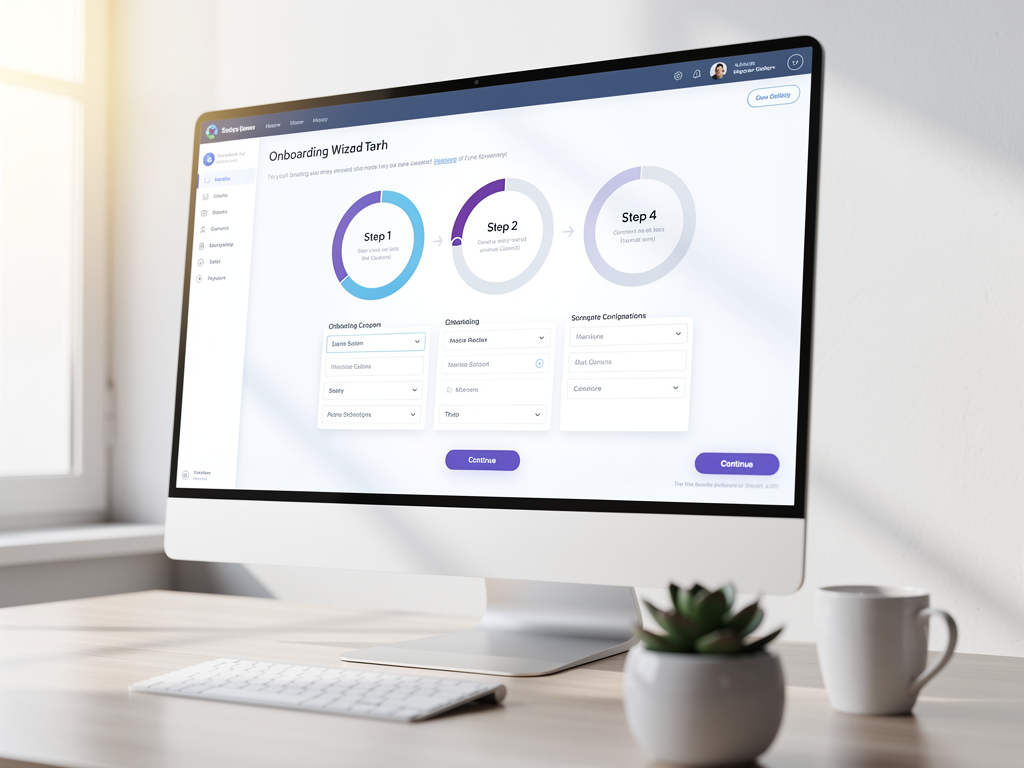
Efficient tenant onboarding is crucial for SaaS growth. The time from signup to productive use directly impacts conversion rates and customer satisfaction. Multi-tenant architecture enables rapid onboarding since new tenants share existing infrastructure, but realizing this benefit requires well-designed provisioning workflows.
Automated provisioning should handle all aspects of tenant setup without manual intervention. This includes creating database records for the new tenant, initializing default configurations, provisioning any tenant-specific resources (like storage buckets or subdomains), and sending welcome communications. The entire process should complete in seconds, not hours or days. Infrastructure as code tools like Terraform or Pulumi can automate resource provisioning, while application-level scripts handle data initialization.
A well-designed onboarding flow guides new tenants through initial configuration:
- Account creation: Collect essential information and create the tenant record
- Initial setup: Configure basic settings like timezone, currency, and branding
- Team invitation: Allow the account owner to invite team members
- Data import: Provide tools to migrate existing data from other systems
- Feature tour: Introduce key platform capabilities through guided tutorials
- Integration setup: Connect external services and configure API access
Tenant configuration management allows customers to customize their experience within the platform's capabilities. This includes branding options (logos, colors, custom domains), feature toggles based on subscription tier, integration settings for external services, and workflow customizations. Store configurations in a centralized, tenant-aware configuration system that can be accessed efficiently throughout the application.
Subscription and billing integration connects tenant lifecycle to revenue operations. When tenants upgrade, downgrade, or cancel their subscriptions, the platform must adjust their access and capabilities accordingly. Integration with payment processors like Stripe enables automated billing, while webhooks keep the application synchronized with subscription status changes. Consider implementing grace periods and dunning workflows to handle failed payments without immediately disrupting service.
Tenant offboarding requires careful handling to satisfy data protection requirements and maintain positive relationships. Provide data export capabilities so departing tenants can retrieve their information. Implement data retention policies that comply with applicable regulations, and ensure complete data deletion when required. Even when a customer leaves, a smooth offboarding experience increases the likelihood of future return or referrals.
Monitoring, Observability, and Tenant-Aware Analytics
Operating a multi-tenant platform requires visibility into system behavior at both the platform level and the individual tenant level. Without tenant-aware observability, troubleshooting issues and optimizing performance becomes extremely difficult as the customer base grows.
Metrics collection should include tenant identifiers as dimensions on all relevant measurements. This enables answering questions like "Which tenant is generating the most API calls?" or "What is the average response time for Tenant X?" Standard platform metrics (CPU usage, memory consumption, request rates) provide overall health visibility, while tenant-segmented metrics reveal usage patterns and potential issues affecting specific customers.
Distributed tracing tracks requests as they flow through your system, capturing timing and context at each step. In multi-tenant environments, traces must include tenant context so you can filter and analyze request patterns by tenant. This capability is invaluable for debugging issues that affect specific tenants or identifying performance bottlenecks in tenant-specific code paths. Tools like Jaeger, Zipkin, or cloud-native tracing services provide the infrastructure for distributed tracing.
Log aggregation centralizes logs from all system components with consistent formatting and tenant tagging. Structured logging (using JSON format, for example) enables efficient querying and analysis. Ensure that log levels are configurable per tenant if needed, allowing increased verbosity for troubleshooting specific customer issues without flooding logs with unnecessary detail from all tenants.
Key metrics to monitor in multi-tenant systems include:
- Request volume by tenant: Identifies heavy users and potential abuse
- Error rates by tenant: Reveals tenant-specific issues or integration problems
- Response latency percentiles: Ensures consistent performance across tenants
- Resource consumption: Tracks storage, compute, and bandwidth usage per tenant
- Feature adoption: Measures which capabilities each tenant utilizes
- Concurrent users: Monitors real-time activity levels by tenant
Alerting systems should trigger notifications for both platform-wide issues and tenant-specific anomalies. Configure alerts for unusual error rates, performance degradation, resource exhaustion, and security events. Consider implementing tenant-specific thresholds that account for normal usage patterns, reducing false positives while catching genuine issues.
Customer-facing analytics provide tenants with visibility into their own usage and performance. Dashboards showing API call volumes, storage consumption, user activity, and feature adoption help customers understand their platform usage and plan for growth. These analytics also support conversations about upgrades when tenants approach plan limits.
Cost Optimization and Resource Management
One of the primary advantages of multi-tenant architecture is cost efficiency, but realizing this advantage requires active management and optimization. As your platform scales, infrastructure costs can grow faster than revenue if not carefully controlled.
Resource allocation strategies determine how shared infrastructure is distributed among tenants. Simple approaches allocate resources equally or based on subscription tier, while sophisticated systems dynamically adjust allocation based on actual usage patterns. Consider implementing resource pools that can be shared across tenants during low-usage periods but reserved for specific tenants during peak times.
Usage-based pricing aligns costs with value delivered and encourages efficient resource utilization by tenants. Metering systems must accurately track consumption across multiple dimensions (API calls, storage, compute time, bandwidth) and attribute usage to the correct tenant. Billing integration translates metered usage into invoices, with appropriate handling for prepaid allocations, overages, and usage-based tiers.
Infrastructure cost optimization opportunities include:
- Right-sizing: Match instance sizes to actual workload requirements
- Reserved capacity: Commit to baseline usage for significant discounts
- Spot instances: Use interruptible compute for fault-tolerant workloads
- Auto-scaling: Automatically adjust capacity based on demand
- Storage tiering: Move infrequently accessed data to cheaper storage classes
- CDN caching: Reduce origin server load and bandwidth costs
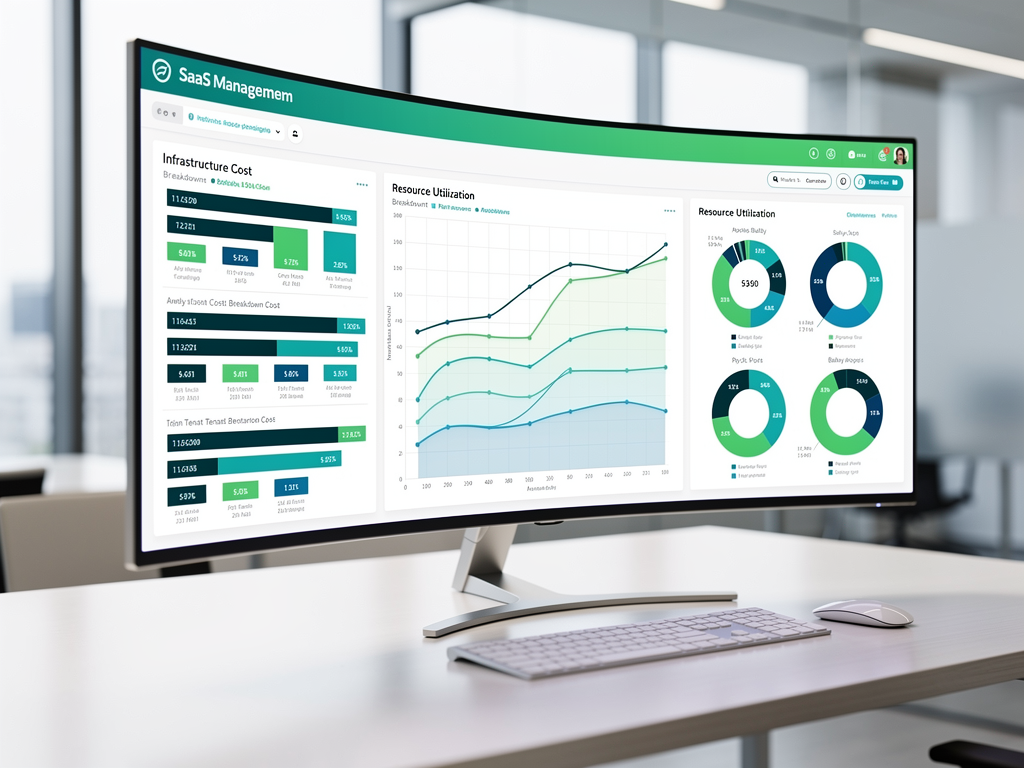
Tenant profitability analysis helps identify which customers generate positive margins and which may require pricing adjustments or efficiency improvements. By tracking infrastructure costs at the tenant level and comparing against revenue, you can make informed decisions about pricing tiers, feature allocation, and customer success investments. Some tenants may consume disproportionate resources relative to their subscription level, indicating opportunities for upselling or plan restructuring.
For startups and early-stage companies, self-hosting options can dramatically reduce infrastructure costs. Platforms like Hetzner combined with deployment tools like Coolify enable enterprise-grade hosting for a fraction of major cloud provider costs. A well-designed SaaS boilerplate should include self-hosting guides that make this option accessible even to teams without dedicated DevOps expertise.
Building with Modern Frameworks and Tools
The technology choices you make for your multi-tenant platform significantly impact development velocity, maintainability, and long-term scalability. Modern frameworks and tools have evolved to address many common multi-tenant challenges, reducing the amount of custom infrastructure you need to build.
Next.js has emerged as a leading framework for building multi-tenant SaaS applications. Its support for middleware enables elegant tenant resolution based on subdomains or custom domains. Server-side rendering and static generation capabilities improve performance and SEO. The App Router architecture provides clean patterns for organizing tenant-aware code. Combined with TypeScript for type safety and Tailwind CSS for rapid UI development, Next.js offers a productive foundation for SaaS development.
Database and ORM choices affect how easily you can implement tenant isolation. Prisma provides a type-safe database client that works well with PostgreSQL, supporting the row-level security and schema patterns common in multi-tenant systems. Its migration system handles schema evolution across all tenants, while its query builder makes it straightforward to include tenant filtering in all database operations.
Authentication libraries like NextAuth (Auth.js) simplify implementing secure authentication with support for multiple providers, session management, and JWT handling. For multi-tenant systems, these libraries can be extended to include tenant context in authentication flows, ensuring that users are associated with the correct tenant from the moment they log in.
State management in multi-tenant applications requires careful consideration. Libraries like Zustand and React Query provide efficient client-side state management that can be scoped to tenant context. Server state (data fetched from APIs) should be cached with tenant-aware keys to prevent data leakage, while client state (UI preferences, form data) typically does not require tenant isolation.
Rather than building every component from scratch, leveraging a SaaS starter kit or Next.js SaaS template can accelerate development significantly. These foundations provide pre-built implementations of common patterns including authentication, tenant management, billing integration, and admin dashboards. The time saved on infrastructure allows teams to focus on their unique product features and go-to-market strategy.
For teams building no-code platforms or app builders, a specialized Next.js starter kit designed for multi-tenant scenarios provides even greater acceleration. Features like custom subdomain support, SSL certificate management, member authentication systems, and white-label capabilities come pre-built, reducing time-to-market from months to weeks.

Team Collaboration and Permission Systems
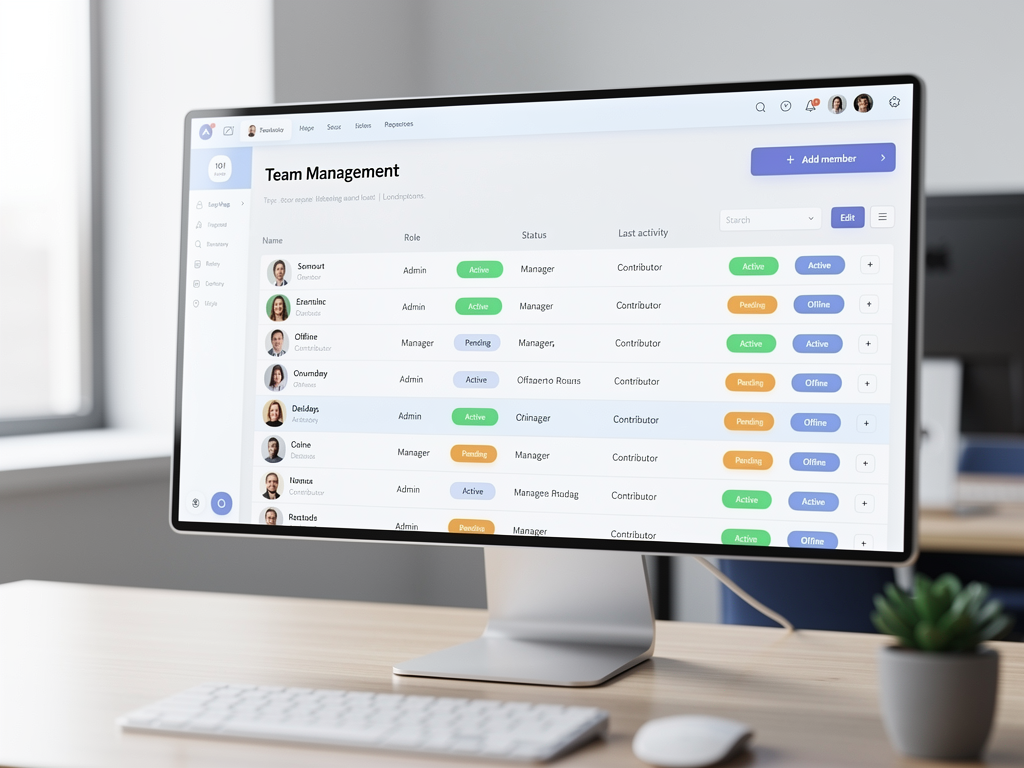
Multi-tenant SaaS platforms typically support team-based usage, where multiple users within a tenant organization collaborate on shared resources. Implementing robust team management and permission systems is essential for serving business customers effectively.
Role-based access control (RBAC) provides a manageable framework for defining what actions different users can perform. Common role hierarchies include:
- Owner: Full administrative access including billing and team management
- Admin: Configuration and user management without billing access
- Manager: Team oversight and approval workflows
- Member: Standard operational access to platform features
- Viewer: Read-only access for stakeholders and auditors
Permission granularity should match your customers' organizational complexity. Simple applications may need only a few broad roles, while enterprise platforms often require fine-grained permissions that can be combined into custom roles. Consider implementing both role-based permissions (for common patterns) and direct permission grants (for exceptions) to provide flexibility without overwhelming complexity.
Invitation and onboarding workflows for team members should be secure and user-friendly. Email invitations with time-limited tokens prevent unauthorized access while enabling self-service team growth. Consider supporting multiple invitation methods including email, shareable links (for less sensitive environments), and domain-based auto-join (for enterprise customers with verified domains).
Audit trails for team actions support both security monitoring and compliance requirements. Log who performed what action, when, and with what parameters. Make audit logs accessible to tenant administrators so they can monitor their own team's activity without requiring platform support intervention.
For platforms serving agencies or enabling white-label solutions, hierarchical tenant structures may be necessary. An agency might manage multiple client tenants, requiring visibility and administrative access across all their clients while maintaining separation between different clients. This adds complexity to the permission model but enables powerful use cases for agency and reseller business models.
API Design for Multi-Tenant Platforms
APIs are the backbone of modern SaaS platforms, enabling integrations, mobile applications, and programmatic access to platform capabilities. Multi-tenant API design requires careful attention to authentication, tenant context, and resource isolation.
Authentication strategies for APIs typically involve API keys, OAuth tokens, or both. API keys provide simple authentication for server-to-server integrations, while OAuth enables user-context operations and third-party application access. In multi-tenant environments, both authentication methods must establish tenant context, either explicitly (tenant ID in the request) or implicitly (derived from the authenticated entity).
Tenant context in API requests can be established through several mechanisms:
- URL path:
/api/v1/tenants/{tenantId}/resources - Subdomain:
tenant1.api.yourplatform.com/resources - Header:
X-Tenant-ID: tenant1 - Token claims: Tenant ID embedded in JWT payload
Each approach has trade-offs. Path-based routing is explicit and cache-friendly but verbose. Subdomain routing aligns with web application patterns but complicates API client configuration. Header-based approaches are flexible but require careful documentation. Token-based context is secure but limits cross-tenant operations.
Rate limiting protects shared infrastructure from abuse and ensures fair resource allocation. Implement rate limits at multiple levels: per-tenant limits prevent any single customer from overwhelming the system, while per-user or per-API-key limits provide finer-grained control. Communicate rate limit status through standard headers (X-RateLimit-Limit, X-RateLimit-Remaining, X-RateLimit-Reset) so clients can adapt their behavior.
Versioning strategies become important as your API evolves. URL-based versioning (/api/v1/, /api/v2/) is explicit and widely understood. Header-based versioning keeps URLs clean but requires more sophisticated client implementation. Whatever strategy you choose, maintain backward compatibility within versions and provide clear migration paths when breaking changes are necessary.
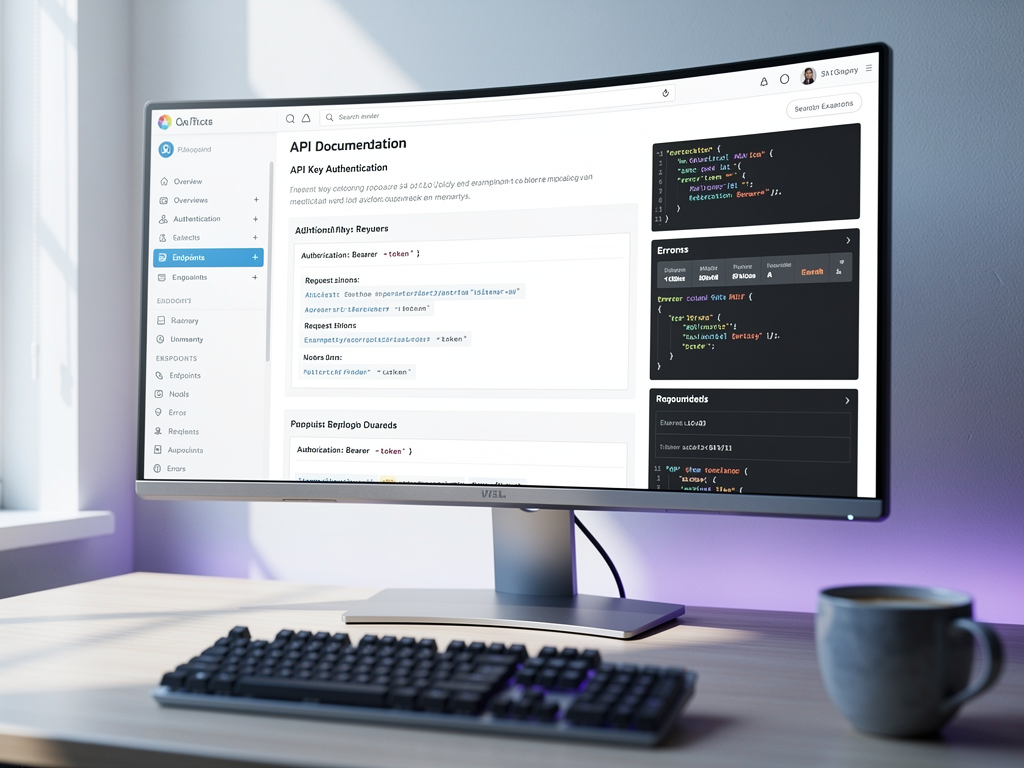
Documentation and developer experience significantly impact API adoption. Provide comprehensive documentation with tenant-specific examples, interactive API explorers that respect tenant context, and SDKs for popular languages. Consider implementing sandbox environments where developers can experiment without affecting production data.
Real-World Implementation Patterns and Case Studies
Understanding how successful platforms implement multi-tenant architecture provides valuable insights for your own development. While every platform has unique requirements, common patterns emerge across different industries and use cases.
No-code platform builders like Webflow and Bubble demonstrate sophisticated multi-tenant implementations. Each user creates applications that are themselves multi-tenant, creating a nested tenancy model. These platforms handle custom domains at scale, implement complex permission systems for application builders and end users, and maintain strict isolation between applications while sharing underlying infrastructure.
B2B SaaS platforms serving enterprise customers often implement hybrid tenancy models. Standard customers share infrastructure for cost efficiency, while enterprise customers receive dedicated resources for compliance and performance requirements. The application codebase supports both modes, with configuration determining the deployment model for each tenant.
White-label solutions for agencies require deep customization capabilities while maintaining operational efficiency. Successful implementations provide extensive branding options, custom domain support, and even custom feature sets per tenant, all managed through configuration rather than code changes. This flexibility enables agencies to deliver differentiated solutions to their clients without requiring custom development for each engagement.
Common implementation challenges and solutions include:
| Challenge | Solution Pattern |
|---|---|
| Cross-tenant data leakage | Row-level security, middleware validation, automated testing |
| Performance inconsistency | Resource quotas, query optimization, caching strategies |
| Complex migrations | Feature flags, gradual rollouts, tenant-specific versions |
| Scaling bottlenecks | Database sharding, read replicas, async processing |
| Compliance requirements | Data residency options, encryption, audit logging |
For technical founders and startup teams, the key lesson from successful implementations is to start with proven foundations. Building multi-tenant infrastructure from scratch consumes enormous development resources that could be directed toward product differentiation. A SaaS template with multi-tenant capabilities built in allows teams to launch faster and iterate on their unique value proposition rather than reinventing common infrastructure.
Conclusion
Building a scalable multi-tenant SaaS platform requires thoughtful architectural decisions across every layer of your technology stack. From database isolation strategies to custom domain support, from tenant-aware monitoring to sophisticated permission systems, the choices you make early in development will determine your platform's ability to grow and serve customers effectively.
The good news is that multi-tenant architecture is a well-understood domain with proven patterns and mature tooling. Modern frameworks like Next.js, combined with databases like PostgreSQL and authentication systems like NextAuth, provide solid foundations for multi-tenant development. Cloud platforms offer the infrastructure flexibility needed to scale from your first customer to your thousandth and beyond.
For SaaS entrepreneurs, no-code platform developers, and technical founders, the path to success involves balancing speed-to-market against architectural quality. Starting with a proven foundation, whether a comprehensive SaaS boilerplate or a specialized multi-tenant starter kit, allows you to launch quickly while building on solid infrastructure. This approach saves hundreds of development hours and reduces the risk of architectural mistakes that could limit future growth.
The multi-tenant model has powered the most successful SaaS companies in the world, and it remains the most efficient way to deliver software at scale. By understanding the principles, patterns, and practices outlined in this guide, you are well-equipped to build platforms that serve your customers effectively while maintaining the operational efficiency needed for sustainable business growth.
Frequently Asked Questions
What Is the Difference Between Multi-Tenant and Single-Tenant Architecture?
Multi-tenant architecture serves multiple customers from a single application instance with shared infrastructure, using logical separation (like tenant ID columns) to isolate data. Single-tenant architecture provides each customer with dedicated infrastructure and application instances. Multi-tenant systems offer significant cost advantages since infrastructure expenses are distributed across all customers, and maintenance is simplified with a single codebase. Single-tenant systems provide maximum isolation and customization but scale poorly, with costs increasing linearly per customer. Most modern SaaS platforms use multi-tenant architecture for efficiency, reserving single-tenant options for enterprise customers with strict compliance requirements. The choice depends on your target market, regulatory environment, and scalability goals.
How Do I Ensure Data Security and Isolation in a Multi-Tenant System?
Effective multi-tenant security requires defense in depth across multiple layers. At the database level, implement row-level security policies that automatically filter queries by tenant ID, preventing accidental data exposure. At the application level, establish tenant context early in the request lifecycle through middleware and propagate it through all operations. Use separate encryption keys per tenant for the highest isolation requirements. Implement comprehensive audit logging to track all data access and modifications. Regular security assessments should specifically test tenant isolation through penetration testing scenarios that attempt cross-tenant access. Authentication systems must validate both user identity and tenant membership before granting access to any resources. These layered protections ensure that even if one mechanism fails, others prevent data leakage.
What Database Strategy Should I Use for Multi-Tenant Applications?
The optimal database strategy depends on your isolation requirements, scale expectations, and operational capabilities. Shared database with tenant ID columns offers maximum cost efficiency and simplest maintenance, suitable for most SaaS applications with standard security requirements. Shared database with separate schemas provides stronger logical isolation while maintaining reasonable efficiency, often preferred for applications handling sensitive data. Separate databases per tenant delivers maximum isolation for compliance-heavy industries like healthcare or finance but significantly increases operational complexity. Most successful platforms start with shared databases and tenant ID filtering, designing their data access layer to abstract the isolation mechanism. This approach allows migrating specific high-value tenants to dedicated databases later without rewriting application code.
How Do Custom Domains and Subdomains Work in Multi-Tenant Platforms?
Custom domain support enables tenants to access your platform through their own branded URLs, essential for white-label solutions and enterprise customers. Implementation requires several coordinated components: DNS configuration where tenants point their domain to your infrastructure via CNAME records, domain verification through DNS challenges to confirm ownership, automated SSL certificate provisioning using Let's Encrypt or similar services, and application-level routing that maps domains to tenant contexts. Subdomain-based multi-tenancy is simpler, requiring wildcard DNS and SSL certificates on your primary domain. The application parses the subdomain from incoming requests to determine tenant context. Both approaches enhance the professional appearance of your platform and enable premium pricing tiers for customers requiring branded experiences.
How Can I Optimize Costs in a Multi-Tenant Architecture?
Cost optimization in multi-tenant systems involves both infrastructure efficiency and tenant-level profitability management. Right-size your compute resources based on actual utilization rather than peak capacity, using auto-scaling to handle demand variations. Implement caching aggressively with tenant-aware cache keys to reduce database load. Use reserved capacity commitments for baseline infrastructure and spot instances for fault-tolerant workloads. At the tenant level, implement resource quotas and usage-based pricing that aligns costs with value delivered. Track per-tenant infrastructure consumption to identify customers requiring pricing adjustments. Consider self-hosting options using cost-effective providers like Hetzner with deployment tools like Coolify, which can reduce hosting costs by 80% or more compared to major cloud providers while maintaining enterprise-grade reliability.
What Tools and Frameworks Are Best for Building Multi-Tenant SaaS?
Modern multi-tenant SaaS development benefits from frameworks and tools designed for this use case. Next.js provides excellent support for multi-tenant patterns through its middleware system, enabling elegant tenant resolution from subdomains or custom domains. PostgreSQL offers row-level security and schema features that simplify tenant isolation at the database level. Prisma provides type-safe database access with migration support suitable for multi-tenant schemas. NextAuth handles authentication with extensibility for tenant-aware sessions. For state management, Zustand and React Query work well with tenant-scoped data. Rather than building everything from scratch, starting with a specialized multi-tenant boilerplate saves hundreds of development hours. Look for foundations that include authentication, tenant management, billing integration, custom domain support, and admin dashboards, allowing your team to focus on unique product features.
Ready to Build Your Multi-Tenant SaaS Platform?
Stop spending months building multi-tenant infrastructure from scratch. NextBuilder provides a complete Next.js foundation for building multi-tenant SaaS platforms, with custom subdomains, SSL certificate management, dual authentication systems, and everything you need to launch in days instead of months. Whether you are building a no-code platform, white-label solution, or subscription-based SaaS, NextBuilder gives you the production-ready architecture to scale from your first customer to thousands. Visit Nextbuilder.dev to explore the demo and start building your platform today.
Subscribe to our newsletter
Subscribe to our newsletter and stay up-to-date with the latest news and updates.