Accelerating Multi-Tenant SaaS Development with BaaS Platforms
Explore how BaaS platforms revolutionize multi-tenant SaaS development by simplifying backend complexities and enabling rapid deployment. Learn about key architectural considerations, implementation strategies, and the economic benefits of multi-tenancy.

Zakariae
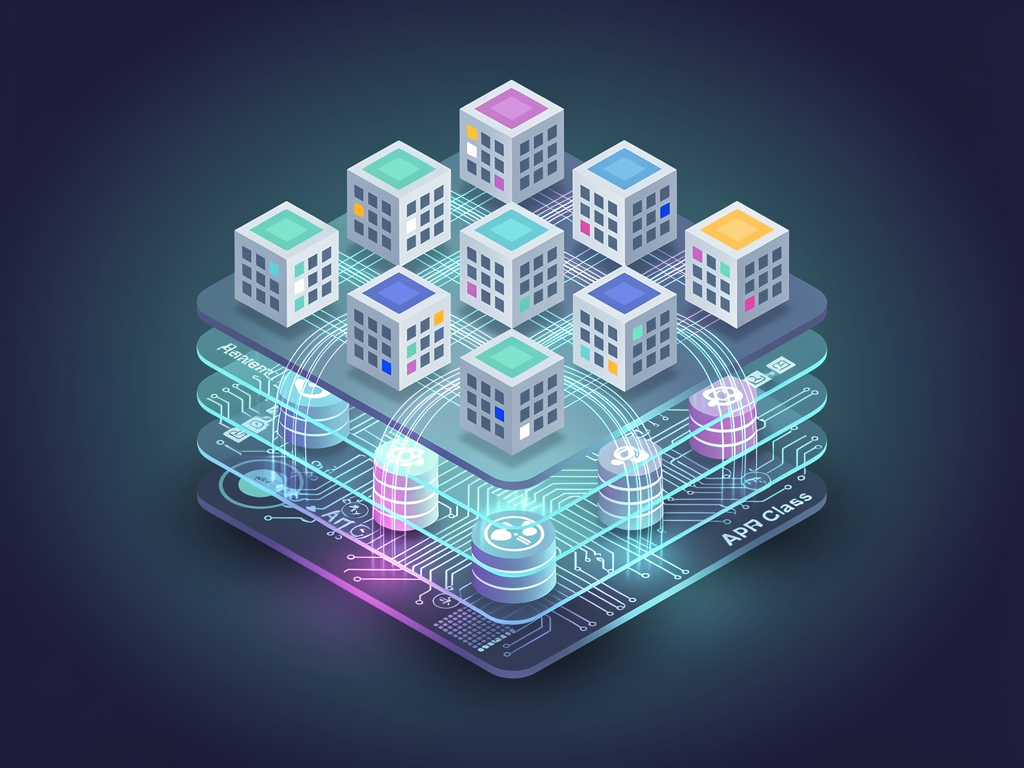
The landscape of SaaS development has transformed dramatically over the past few years, with multi-tenant architectures becoming the gold standard for scalable, cost-effective software platforms. According to recent market research, the global multi-tenant SaaS architecture market is projected to grow at a 14.7% CAGR from 2025 to 2033, reaching approximately $13.4 billion. This explosive growth reflects a fundamental shift in how entrepreneurs and development teams approach building software products. At the heart of this transformation lies an increasingly popular approach: leveraging backend as a service BaaS platform solutions to accelerate development timelines while maintaining enterprise-grade reliability.
For SaaS entrepreneurs, no-code platform developers, and technical founders alike, understanding how BaaS platforms integrate with multi-tenant architectures can mean the difference between launching in weeks versus months. Whether you are building client portals, app builder tools, or white-label solutions, the right backend infrastructure decisions made early in your project will compound into significant advantages as your platform scales. This comprehensive guide explores everything you need to know about leveraging BaaS platforms for multi-tenant SaaS development, from architectural considerations to implementation strategies and beyond.
Key Takeaways
- BaaS platforms eliminate backend complexity by providing pre-built authentication, database management, and API infrastructure, allowing teams to focus on unique product features.
- Multi-tenant architecture enables cost efficiency through shared infrastructure while maintaining strict data isolation between customers.
- Choosing the right database tenancy model (shared database, schema-per-tenant, or database-per-tenant) directly impacts scalability, security, and operational costs.
- Modern boilerplates and starter kits can save 600+ hours of development time by providing production-ready multi-tenant features out of the box.
- Self-hosting options allow enterprise-level platforms to operate for as little as $15 per month while maintaining full control over data and infrastructure.
- Proper tenant isolation strategies are essential for compliance with data protection regulations and building customer trust.
- Real-time analytics and monitoring become critical as your tenant base grows, requiring thoughtful instrumentation from day one.

Understanding BaaS Platforms and Their Role in Modern SaaS Development
Backend as a Service platforms represent a paradigm shift in how developers approach building web and mobile applications. Rather than spending weeks configuring servers, setting up databases, implementing authentication systems, and building API endpoints from scratch, BaaS platforms provide these foundational components as managed services. This abstraction layer allows development teams to focus their energy on what truly differentiates their product: the user experience, business logic, and unique features that solve customer problems.
The core components typically offered by BaaS platforms include managed databases with automatic scaling, authentication and authorization systems supporting multiple providers, file storage solutions with CDN integration, serverless functions for custom backend logic, and real-time data synchronization capabilities. For multi-tenant SaaS applications, these components become even more valuable because they often include built-in support for tenant isolation, row-level security policies, and organizational hierarchies.
Popular BaaS platforms like Supabase, Firebase, and AWS Amplify have gained significant traction among SaaS developers. Supabase, in particular, has emerged as a favorite for multi-tenant applications due to its PostgreSQL foundation, which enables sophisticated row-level security policies essential for proper tenant data isolation. The platform's open-source nature also means teams can self-host when needed, providing flexibility for compliance requirements or cost optimization at scale.
When evaluating BaaS platforms for multi-tenant development, consider factors beyond basic feature lists. Examine the platform's approach to connection pooling (critical for applications with many tenants), backup and recovery options, geographic distribution capabilities, and pricing models at scale. A platform that seems affordable for ten tenants might become prohibitively expensive at ten thousand, making early architectural decisions crucial for long-term viability.
The Economics of Multi-Tenant Architecture for SaaS Platforms
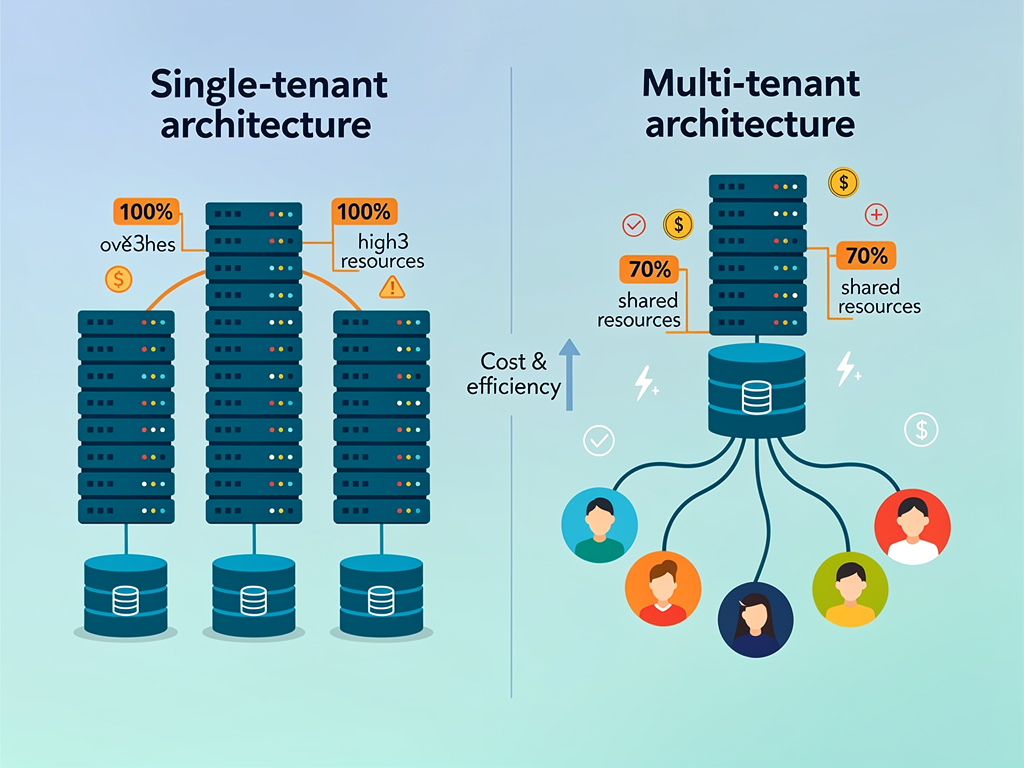
Multi-tenant architecture has become the de facto standard for SaaS applications because of its compelling economic advantages. In a multi-tenant model, multiple customers share a single application instance and infrastructure while maintaining logical separation of their data. This approach contrasts sharply with single-tenant deployments, where each customer receives their own dedicated application instance, database, and often separate infrastructure.
The cost benefits of multi-tenancy compound significantly as your customer base grows. Consider the infrastructure costs alone: a single-tenant approach might require provisioning separate database instances, compute resources, and storage for each customer. With 100 customers, you are managing 100 separate environments. Multi-tenancy allows those same 100 customers to share optimized, pooled resources, dramatically reducing per-customer infrastructure costs while simplifying operational overhead.
| Factor | Single-Tenant | Multi-Tenant |
|---|---|---|
| Infrastructure Cost per Customer | High (dedicated resources) | Low (shared resources) |
| Deployment Complexity | High (multiple environments) | Low (single environment) |
| Update Rollout Speed | Slow (sequential updates) | Fast (single deployment) |
| Data Isolation | Physical separation | Logical separation |
| Customization Flexibility | High (per-tenant changes) | Moderate (configuration-based) |
| Scaling Efficiency | Linear cost increase | Sublinear cost increase |
Beyond infrastructure savings, multi-tenancy simplifies software maintenance and updates. When you release a new feature or security patch, you deploy it once and all customers benefit immediately. This centralized approach reduces the engineering burden of maintaining multiple codebases or deployment pipelines, allowing your team to move faster and deliver more value to customers. According to industry analysts, teams using multi-tenant architectures can often operate with 40-60% fewer DevOps resources compared to equivalent single-tenant deployments.
The economic model also enables more flexible pricing strategies. With lower per-customer costs, you can offer competitive pricing tiers that attract smaller customers while maintaining healthy margins. This accessibility helps build market share and creates opportunities for customers to grow into higher-value plans over time, a classic land-and-expand strategy that has proven successful for companies like Slack, Salesforce, and Zendesk.
Database Tenancy Models: Choosing the Right Approach
One of the most consequential decisions in multi-tenant SaaS development involves selecting the appropriate database tenancy model. This choice affects security, scalability, operational complexity, and cost structure throughout your platform's lifecycle. Three primary models exist, each with distinct trade-offs that align with different business requirements and technical constraints.
The shared database with shared schema model represents the most economical approach. All tenants share a single database and tables, with a tenant identifier column distinguishing records belonging to different customers. This model maximizes resource efficiency and simplifies database administration but requires careful implementation of row-level security policies to prevent data leakage between tenants. BaaS platforms like Supabase excel here, offering PostgreSQL's native row-level security features that can enforce tenant isolation at the database level rather than relying solely on application logic.
The shared database with separate schemas model provides stronger isolation while maintaining some resource efficiency. Each tenant receives their own database schema within a shared database instance. This approach simplifies certain compliance requirements and makes tenant-specific customizations easier to implement. However, it increases complexity around schema migrations (which must be applied across all tenant schemas) and can create challenges with connection pooling as tenant counts grow.
The database-per-tenant model offers maximum isolation at the highest cost. Each tenant receives a completely separate database instance, providing physical data separation that satisfies the strictest compliance requirements. This model works well for enterprise customers with specific data residency requirements or those willing to pay premium prices for dedicated resources. The operational overhead increases significantly, but modern infrastructure-as-code tools and container orchestration platforms can help manage this complexity.
Pro Tip: Many successful multi-tenant platforms use a hybrid approach, placing most customers in a shared database model while offering dedicated database instances as a premium feature for enterprise clients. This strategy balances cost efficiency with the flexibility to serve diverse customer requirements.
When implementing any tenancy model, ensure your application's data access layer consistently enforces tenant context. Every database query should include tenant filtering, and this filtering should be implemented at the lowest possible level (ideally the database itself via row-level security) rather than relying on application code that could be bypassed through bugs or security vulnerabilities. This defense-in-depth approach is essential for maintaining customer trust and regulatory compliance.
Authentication and Authorization in Multi-Tenant Environments
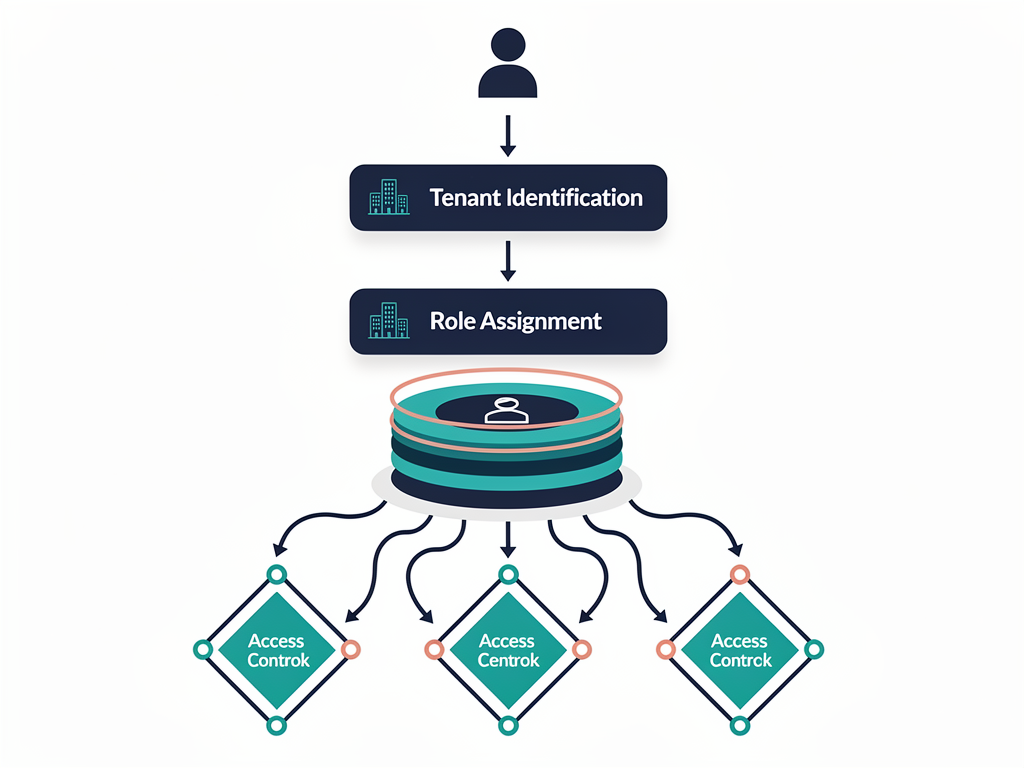
Authentication and authorization become significantly more complex in multi-tenant applications. Beyond simply verifying user identity, your system must understand which tenant a user belongs to, what role they hold within that tenant, and what resources they are permitted to access. BaaS platforms typically provide foundational authentication services, but multi-tenant scenarios often require additional layers of logic to properly manage organizational hierarchies and permissions.
A robust multi-tenant authentication system must support several key scenarios. Users may belong to multiple tenants (common in agency or consulting contexts), requiring tenant switching capabilities. Organizations need to manage their own users, including inviting team members, assigning roles, and revoking access. Some platforms require separate authentication contexts for platform administrators versus tenant users, creating dual authentication flows with different permission models.
Modern authentication frameworks like NextAuth.js (now Auth.js) provide excellent foundations for multi-tenant authentication when combined with appropriate session management strategies. The key is extending the basic authentication flow to include tenant context in the session, ensuring every authenticated request carries both user identity and organizational affiliation. This context then flows through your application, informing authorization decisions at every layer.
Role-based access control (RBAC) within tenants typically involves defining a hierarchy of permission levels. A common pattern includes five tiers: Owner (full administrative control), Admin (user management and settings), Manager (team oversight and reporting), Member (standard access), and Viewer (read-only access). Each role maps to specific permissions that gate access to features, data, and administrative functions within the tenant context.
Consider implementing organization-level single sign-on (SSO) as a premium feature for enterprise tenants. Many larger organizations require SAML or OIDC integration with their identity providers, and offering this capability can be a significant differentiator when selling to enterprise customers. BaaS platforms vary in their SSO support, so evaluate this capability early if enterprise sales are part of your strategy.
Custom Domains and SSL: Essential Features for White-Label Platforms
For SaaS platforms targeting agencies, resellers, or businesses that want to present your software under their own brand, custom domain support becomes a critical feature. White-label solutions require each tenant to access the platform through their own domain (client.theirbrand.com) rather than a subdomain of your platform (client.yourplatform.com). Implementing this capability involves several technical challenges that BaaS platforms and modern hosting infrastructure can help address.
The technical implementation of custom domains typically involves three components: DNS configuration (tenants point their domain to your infrastructure), SSL certificate provisioning (automatically generating and renewing certificates for each custom domain), and request routing (directing incoming requests to the correct tenant context based on the hostname). Services like Cloudflare, Vercel, and specialized platforms like Approximated can automate much of this complexity.
Subdomain-based multi-tenancy (tenant1.yourplatform.com, tenant2.yourplatform.com) offers a simpler implementation path while still providing tenant-specific URLs. This approach uses wildcard DNS records and wildcard SSL certificates, avoiding the per-domain certificate management complexity. Many platforms start with subdomain-based tenancy and add custom domain support as a premium feature once the core product is established.
When implementing custom domains, consider the user experience implications carefully. Tenants should be able to configure their domains through a self-service interface, with clear instructions for DNS configuration and automatic verification of proper setup. The system should gracefully handle misconfigured domains, providing helpful error messages rather than cryptic failures. SSL certificate provisioning should be completely transparent to tenants, with automatic renewal preventing any service interruptions.
Leveraging Boilerplates and Starter Kits for Rapid Development
Building a multi-tenant SaaS platform from scratch involves implementing dozens of foundational features before you can even begin working on your unique value proposition. Authentication, billing integration, user management, team collaboration, email systems, admin dashboards, and tenant isolation logic all require significant development effort. This reality has driven the popularity of SaaS boilerplate solutions that provide these features out of the box, dramatically accelerating time to market.
A well-designed multi-tenant boilerplate can save 600 or more hours of development time by providing production-ready implementations of common SaaS features. Rather than spending months building authentication flows, payment integration, and administrative interfaces, teams can focus immediately on the features that differentiate their product. This acceleration is particularly valuable for startups operating under funding constraints or market timing pressures.
When evaluating boilerplates, look for solutions built on modern, maintainable technology stacks. A Next.js boilerplate offers advantages including server-side rendering for SEO, API routes for backend logic, and excellent developer experience. The combination of React for the frontend with Next.js for full-stack capabilities has become a popular choice for SaaS development, supported by a robust ecosystem of libraries and tools.
Key features to look for in a SaaS starter kit include:
- Multi-tenant architecture with proper data isolation and tenant context management
- Dual authentication systems supporting both platform users and tenant members
- Payment integration with subscription management and usage-based billing support
- Admin dashboards with real-time analytics and tenant management capabilities
- Team collaboration features with role-based permissions
- Email infrastructure including transactional emails and marketing campaigns
- Self-hosting documentation for cost optimization and compliance requirements
The Next.js starter kit ecosystem has matured significantly, with options ranging from minimal starting points to comprehensive platforms. A Next.js SaaS template that includes multi-tenant features specifically can provide the foundation for platforms where clients build their own applications, such as no-code builders, form platforms, or website builders. These specialized templates understand the unique requirements of platforms that serve as infrastructure for their customers' businesses.

Building No-Code Platforms: A Special Case of Multi-Tenancy
No-code and low-code platforms represent a fascinating application of multi-tenant architecture where the tenants themselves become platform builders. These platforms enable non-technical users to create applications, websites, forms, or workflows without writing code. The multi-tenant challenges multiply in this context: you must isolate not only tenant data but also the applications, configurations, and end-user data that tenants create within your platform.
The architecture of a no-code platform typically involves multiple layers of tenancy. At the first level, your platform serves multiple organizations (your direct customers). At the second level, each organization may create multiple applications or projects. At the third level, those applications serve the organization's own users, who interact with the created applications. This nested structure requires careful design to maintain performance, security, and manageability.
Consider a form builder platform as an example. Your customers (tenants) use your platform to create forms. Those forms are then filled out by the tenant's customers (end users). The data flows look like this: tenant configuration defines form structure, end users submit form responses, responses are stored with proper tenant attribution, and tenants access their response data through your platform. Each layer requires appropriate access controls and data isolation.
Platforms like DrapCode have emerged specifically to address multi-tenant application development, offering no-code tools for building SaaS platforms with built-in tenant isolation. These meta-platforms recognize that many SaaS products share common architectural patterns and provide abstractions that simplify implementation while maintaining flexibility for customization.
When building no-code platforms, pay special attention to resource limits and fair usage policies. Without careful controls, a single tenant could consume disproportionate resources, affecting platform performance for other customers. Implement limits on storage, API calls, compute time, and other resources at the tenant level, with clear upgrade paths for customers who need more capacity. This approach protects platform stability while creating natural monetization opportunities.
Self-Hosting Strategies for Cost Optimization and Compliance
While BaaS platforms offer convenience and managed infrastructure, many SaaS operators eventually consider self-hosting for cost optimization or compliance requirements. The economics shift significantly at scale: a platform paying $500 per month to a managed BaaS provider might achieve equivalent functionality for $50 per month on self-hosted infrastructure. For bootstrapped startups or platforms with thin margins, this difference can determine viability.
Modern self-hosting has become dramatically more accessible through tools like Coolify, which provides a self-hosted alternative to platforms like Heroku and Vercel. Combined with affordable cloud providers like Hetzner (offering powerful dedicated servers at a fraction of hyperscaler prices), teams can deploy enterprise-grade infrastructure for remarkably low costs. A complete stack including application servers, databases, and supporting services can run for as little as $15 to $30 per month.
The self-hosting decision involves trade-offs beyond pure cost. You gain complete control over your data and infrastructure, eliminating vendor lock-in concerns and enabling compliance with data residency requirements. However, you also accept responsibility for security updates, backup management, scaling operations, and incident response. Teams must honestly assess their operational capabilities before committing to self-hosted infrastructure.
A pragmatic approach involves starting with managed services during the early product development phase, when iteration speed matters most and usage volumes are low. As the product stabilizes and customer base grows, gradually migrate components to self-hosted infrastructure based on cost-benefit analysis. Database hosting often provides the largest savings opportunity, followed by application hosting and file storage.

Implementation Tip: When self-hosting, invest heavily in automation from day one. Infrastructure-as-code tools like Terraform or Pulumi, combined with containerization via Docker, ensure your deployments are reproducible and your infrastructure is documented. This investment pays dividends when scaling, debugging issues, or onboarding new team members.
Implementing Billing and Monetization for Multi-Tenant Platforms
Monetization in multi-tenant SaaS involves more complexity than simple subscription billing. Platforms must support multiple pricing models, handle tenant-level billing administration, and often enable tenants to monetize their own offerings. A SaaS template that includes robust billing infrastructure can save significant development time while ensuring proper handling of edge cases that trip up custom implementations.
Common pricing models for multi-tenant platforms include flat-rate subscriptions (fixed monthly fee per tier), per-seat pricing (charges based on number of users), usage-based billing (metered charges for resources consumed), and hybrid models combining base subscriptions with usage overages. Your billing infrastructure must support whichever models align with your business strategy, ideally with flexibility to experiment with different approaches.
Payment processors like Stripe have become the standard for SaaS billing, offering comprehensive APIs for subscription management, usage metering, invoicing, and tax compliance. Stripe Connect extends these capabilities for platforms that need to facilitate payments to their tenants, enabling marketplace-style business models. The complexity of payment processing, including handling failed payments, subscription upgrades and downgrades, proration, and refunds, makes leveraging established payment infrastructure highly advisable.
Consider implementing tenant-level billing administration that allows organizations to manage their own payment methods, view invoices, and adjust their subscriptions. Self-service billing reduces support burden and improves customer experience. Provide clear visibility into current usage against plan limits, with proactive notifications as customers approach thresholds, creating natural upgrade opportunities.
For platforms enabling tenant monetization (such as marketplace builders or app stores), implement proper payment splitting and payout management. Tenants should be able to connect their own payment accounts, set pricing for their offerings, and receive payouts on predictable schedules. This capability transforms your platform from a tool into an economic ecosystem, increasing tenant investment and reducing churn.
Analytics and Monitoring in Multi-Tenant Environments
Effective analytics and monitoring become exponentially more important as your tenant base grows. You need visibility into platform-wide health metrics while also providing tenant-specific analytics that help your customers succeed. This dual requirement shapes both your instrumentation strategy and the analytics features you expose to tenants.
Platform-level monitoring should track infrastructure health (server resources, database performance, error rates), business metrics (tenant growth, revenue, churn), and usage patterns (feature adoption, API utilization, resource consumption). Tools like Prometheus for metrics collection, Grafana for visualization, and services like Sentry for error tracking provide comprehensive observability. Establish alerting thresholds that notify your team of issues before they impact customers.
Tenant-facing analytics help your customers understand how they are using your platform and the value they are receiving. Depending on your product, this might include usage dashboards, performance metrics, user activity reports, or business intelligence features. These analytics serve multiple purposes: demonstrating value (supporting retention), identifying optimization opportunities (driving engagement), and informing upgrade decisions (supporting expansion revenue).
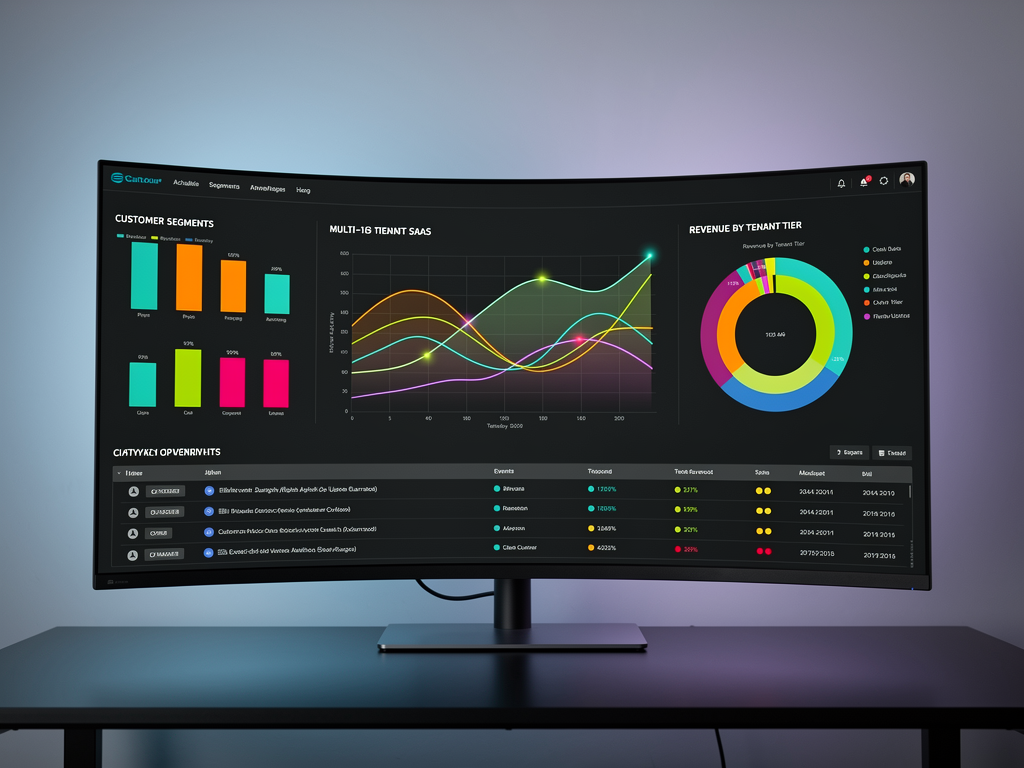
Implement analytics with tenant isolation from the start. Every metric, log entry, and event should carry tenant context, enabling both aggregate analysis and tenant-specific queries. This architecture supports troubleshooting (quickly identifying which tenant is affected by an issue), capacity planning (understanding resource consumption patterns), and business analysis (identifying your most valuable customer segments).
Consider offering analytics API access as a premium feature for tenants who want to integrate your data with their own business intelligence tools. This capability is particularly valuable for enterprise customers with established reporting workflows. Ensure proper rate limiting and access controls on analytics APIs to prevent abuse while enabling legitimate integration use cases.
Security Best Practices for Multi-Tenant SaaS Applications
Security in multi-tenant environments requires defense-in-depth strategies that protect against both external threats and potential cross-tenant data leakage. The shared nature of multi-tenant infrastructure creates unique attack surfaces that must be addressed through careful architectural decisions and ongoing security practices.
Data isolation represents the most critical security concern. Implement tenant filtering at the database level using row-level security policies rather than relying solely on application logic. This approach ensures that even application bugs or SQL injection vulnerabilities cannot expose one tenant's data to another. Regularly audit your data access patterns to verify isolation is maintained, and consider automated testing that specifically checks for cross-tenant data leakage.
Authentication security should include multi-factor authentication options, session management with appropriate timeouts and invalidation capabilities, brute force protection through rate limiting and account lockouts, and secure password policies enforced at the application level. For platforms handling sensitive data, consider offering hardware security key support and integration with enterprise identity providers.
Network security involves proper configuration of firewalls, encryption of data in transit (TLS everywhere), and careful management of API access. Implement API authentication using industry-standard approaches like OAuth 2.0 or API keys with appropriate scoping. Rate limit all API endpoints to prevent abuse, with limits that can be adjusted per tenant based on their subscription tier.
Compliance requirements vary by industry and geography but commonly include SOC 2 (demonstrating security controls), GDPR (European data protection), HIPAA (healthcare data in the US), and PCI DSS (payment card data). Understand which compliance frameworks apply to your target market and design your security architecture to support certification when needed. Many BaaS platforms provide compliance documentation that can accelerate your own certification efforts.
Scaling Strategies for Growing Multi-Tenant Platforms
Successful multi-tenant platforms must scale gracefully as tenant counts and usage volumes grow. Scaling involves both technical infrastructure considerations and operational processes that maintain service quality as complexity increases. Planning for scale early, even before you need it, prevents costly re-architecture efforts later.
Database scaling typically presents the first bottleneck for growing platforms. Strategies include read replicas (distributing read queries across multiple database instances), connection pooling (efficiently managing database connections across many tenants), query optimization (ensuring efficient data access patterns), and eventually sharding (distributing tenants across multiple database clusters). BaaS platforms handle much of this complexity automatically, but understanding the underlying approaches helps you make informed architectural decisions.
Application layer scaling leverages containerization and orchestration platforms like Kubernetes to run multiple application instances behind load balancers. Stateless application design, where no session state is stored on individual servers, enables horizontal scaling by simply adding more instances. Implement health checks and automatic instance replacement to maintain availability during failures or deployments.
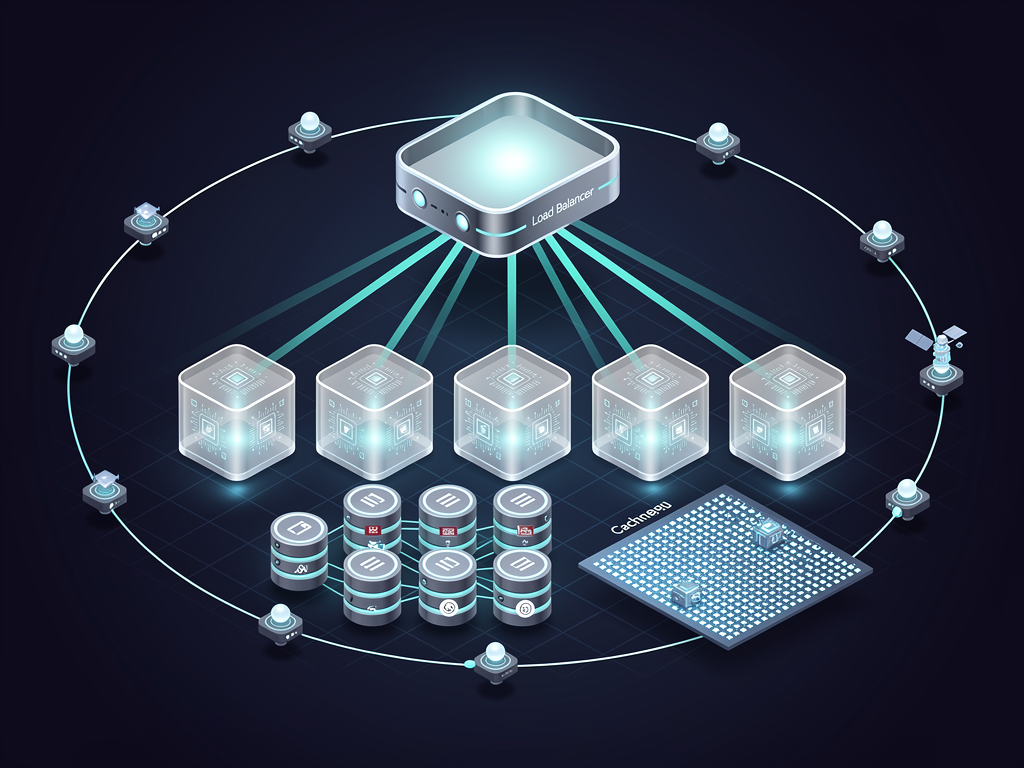
Caching strategies become essential at scale. Implement caching at multiple layers: CDN caching for static assets and API responses where appropriate, application-level caching using Redis or similar for frequently accessed data, and database query caching for expensive computations. Ensure cache invalidation properly respects tenant boundaries, preventing cached data from one tenant being served to another.
Consider implementing tenant tiering that places high-value or high-usage tenants on dedicated infrastructure while smaller tenants share pooled resources. This hybrid approach optimizes costs while ensuring your most important customers receive premium performance. Automate tenant placement decisions based on usage patterns and subscription tiers.
Building Effective Admin Dashboards for Platform Management
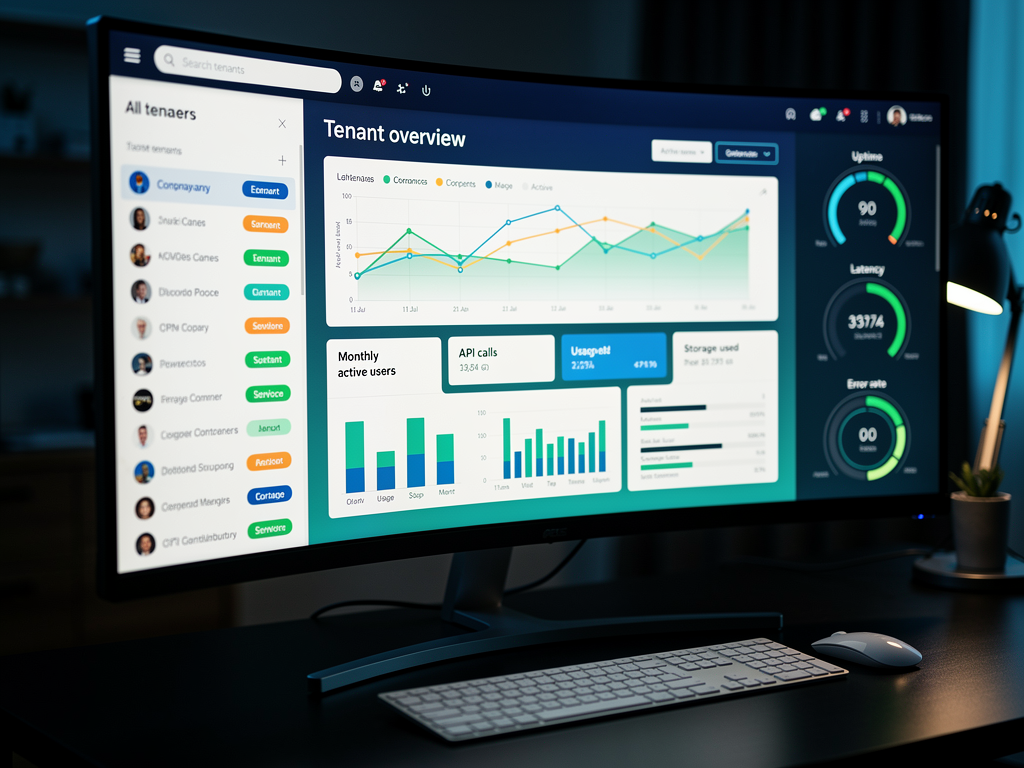
Platform operators need comprehensive administrative tools to manage tenants, monitor system health, and respond to issues. An effective admin dashboard provides visibility into all aspects of platform operation while enabling quick action when problems arise. Building these tools thoughtfully from the start prevents operational chaos as your platform grows.
Core admin dashboard features should include tenant management (viewing, searching, and administering tenant accounts), user management (supporting customers with account issues), system health monitoring (infrastructure metrics and alerts), billing administration (managing subscriptions and handling payment issues), and feature flag management (controlling feature rollouts and tenant-specific configurations).
Implement robust audit logging that tracks all administrative actions. When an admin modifies a tenant's configuration, adjusts billing, or accesses customer data, record who did what and when. This audit trail supports security investigations, compliance requirements, and internal accountability. Make audit logs easily searchable and consider implementing alerts for sensitive operations.
Role-based access control within your admin team prevents unauthorized access to sensitive operations. Not every support agent needs the ability to modify billing or access all customer data. Define admin roles with appropriate permission boundaries, implementing the principle of least privilege. Require additional authentication (such as re-entering password or MFA) for particularly sensitive operations.
Email Infrastructure and Communication Systems
Email remains a critical communication channel for SaaS platforms, serving both transactional purposes (password resets, notifications, receipts) and marketing functions (onboarding sequences, feature announcements, re-engagement campaigns). Building robust email infrastructure requires attention to deliverability, scalability, and tenant-specific customization.
Transactional email should be reliable, fast, and properly branded. Use established email service providers like SendGrid, Postmark, or Amazon SES rather than attempting to run your own mail servers. These services handle deliverability optimization, bounce management, and compliance requirements that would otherwise consume significant engineering effort. Implement proper email authentication (SPF, DKIM, DMARC) to maximize inbox placement.
For platforms offering white-label capabilities, enable tenant-specific email customization. Tenants should be able to configure their own sender addresses, email templates, and branding. This customization reinforces the white-label experience for end users while maintaining your platform's technical infrastructure. Consider offering custom domain email sending as a premium feature for tenants who want complete branding control.
Marketing email capabilities, including campaign builders and subscriber management, add significant value for tenants who want to communicate with their own users. Implementing these features requires careful attention to anti-spam regulations (CAN-SPAM, GDPR), unsubscribe handling, and sending reputation management. Platforms like SeoSmart demonstrate how content and communication automation can be integrated into SaaS platforms to provide additional value for users.
Design your email templates with flexibility in mind. Create a template system that supports variable substitution, conditional content blocks, and responsive design. Provide tenants with template customization capabilities while maintaining guardrails that prevent broken layouts or deliverability-harming content. Pre-built templates for common scenarios (welcome emails, password resets, billing notifications) accelerate tenant onboarding.
Testing Strategies for Multi-Tenant Applications
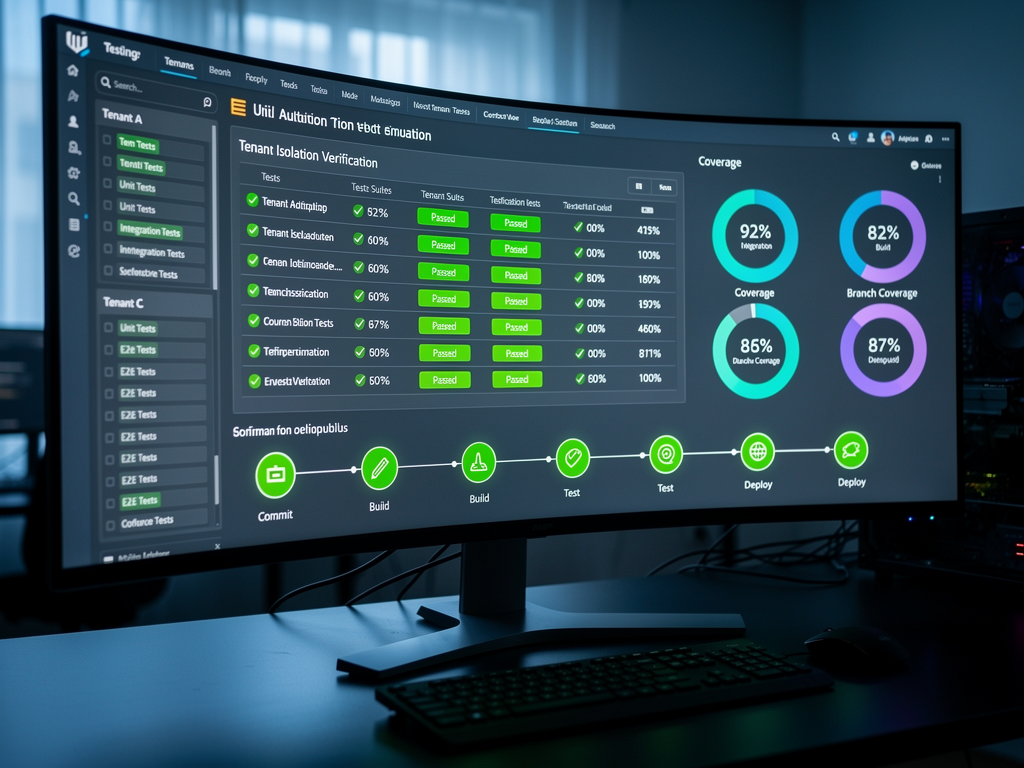
Testing multi-tenant applications requires strategies that verify both functional correctness and proper tenant isolation. Standard testing approaches must be extended to cover the unique scenarios that arise when multiple organizations share infrastructure. Investing in comprehensive testing prevents embarrassing and potentially costly data leakage incidents.
Unit tests should verify that all data access functions properly filter by tenant context. Create test utilities that make it easy to run the same tests against different tenant contexts, verifying that results are appropriately isolated. Mock tenant context in tests to ensure functions behave correctly regardless of which tenant is active.
Integration tests should specifically check for cross-tenant data leakage. Create test scenarios where multiple tenants exist with similar data, then verify that queries, API responses, and UI displays only show data belonging to the current tenant. Automate these tests to run on every deployment, catching isolation regressions before they reach production.
Load testing should simulate realistic multi-tenant usage patterns. Create test scenarios with many concurrent tenants performing typical operations, verifying that performance remains acceptable and no tenant can monopolize resources. Use load testing to identify scaling bottlenecks before they impact production customers.
Consider implementing chaos engineering practices that deliberately introduce failures to verify system resilience. Test scenarios like database failover, network partitions, and resource exhaustion to ensure your platform degrades gracefully rather than catastrophically. Multi-tenant platforms have amplified blast radius when failures occur, making resilience testing particularly important.
Future-Proofing Your Multi-Tenant Architecture
Technology landscapes evolve rapidly, and architectural decisions made today will constrain or enable options for years to come. Building with flexibility in mind helps ensure your platform can adapt to changing requirements, new technologies, and evolving customer expectations without requiring complete rebuilds.
Design your data models with extensibility in mind. Use patterns like JSON columns for tenant-specific custom fields, enabling tenants to extend your data model without schema changes. Implement versioned APIs that allow you to evolve interfaces while maintaining backward compatibility for existing integrations. Document your architectural decisions and the reasoning behind them, creating institutional knowledge that survives team changes.
Stay informed about emerging patterns and technologies in the multi-tenant space. Edge computing, serverless architectures, and AI-powered features are reshaping what is possible in SaaS applications. While you should not chase every trend, understanding the landscape helps you make informed decisions about when to adopt new approaches and when to stick with proven patterns.

Build relationships with your customer base that provide insight into their evolving needs. The best product roadmaps emerge from deep understanding of customer problems rather than technology-driven feature lists. Regular customer conversations, usage analytics, and feedback mechanisms help you anticipate requirements before they become urgent, enabling proactive rather than reactive development.
Conclusion
Building successful multi-tenant SaaS platforms requires thoughtful integration of BaaS platforms, proper architectural decisions, and attention to the unique challenges of serving multiple organizations from shared infrastructure. The economic advantages of multi-tenancy are compelling, with shared resources, simplified operations, and efficient scaling creating sustainable business models that can serve customers ranging from small startups to large enterprises.
The technology ecosystem supporting multi-tenant development has matured significantly. Modern BaaS platforms provide sophisticated data isolation, authentication, and scaling capabilities out of the box. Comprehensive boilerplates and starter kits can save hundreds of hours of development time, allowing teams to focus on differentiated features rather than foundational infrastructure. Self-hosting options enable cost optimization and compliance flexibility as platforms scale.
Success in multi-tenant SaaS ultimately comes down to execution: choosing the right tenancy model for your use case, implementing proper security and isolation, building operational tools that scale with your customer base, and maintaining the flexibility to evolve as requirements change. The patterns and practices outlined in this guide provide a foundation, but every platform will face unique challenges that require creative problem-solving and continuous learning.
Whether you are building a no-code platform, a client portal system, a white-label solution, or any other multi-tenant application, the principles remain consistent: prioritize tenant isolation, invest in operational tooling, plan for scale, and never stop listening to your customers. With these foundations in place, you are well-positioned to build platforms that deliver value for years to come.
Frequently Asked Questions
What Is the Difference Between Multi-Tenant and Single-Tenant SaaS Architecture?
Multi-tenant architecture serves multiple customers from a single application instance and shared infrastructure, with logical separation keeping each tenant's data isolated. Single-tenant architecture provides each customer with their own dedicated application instance and infrastructure. The key trade-offs involve cost efficiency versus isolation strength. Multi-tenant platforms typically cost 40-60% less to operate per customer because infrastructure, maintenance, and update costs are distributed across all tenants. However, single-tenant deployments offer stronger isolation that some enterprise customers or regulated industries require. Many successful platforms offer both options, using multi-tenancy as the default while providing single-tenant deployments as a premium enterprise feature. The choice depends on your target market's requirements, your operational capabilities, and your pricing strategy.
How Do I Ensure Data Security and Isolation Between Tenants?
Implementing robust tenant isolation requires a defense-in-depth approach across multiple layers. At the database level, use row-level security policies that enforce tenant filtering for every query, ensuring isolation cannot be bypassed by application bugs. In your application code, implement middleware that establishes tenant context early in request processing and validates that context throughout the request lifecycle. Conduct regular security audits specifically testing for cross-tenant data leakage, including automated tests that attempt to access one tenant's data while authenticated as another. Encrypt sensitive data at rest with tenant-specific keys where compliance requirements demand it. Finally, implement comprehensive audit logging that tracks all data access, enabling investigation of any suspected security incidents. These layered controls provide confidence that tenant data remains properly isolated.
Which Database Tenancy Model Should I Choose for My SaaS Platform?
The optimal database tenancy model depends on your specific requirements around isolation, compliance, customization, and cost. The shared database with shared schema model offers maximum cost efficiency and simplest operations, making it ideal for platforms with many small tenants and standard data requirements. Shared database with separate schemas provides stronger isolation and easier tenant-specific customization, suitable for platforms serving mid-market customers with moderate compliance needs. Database-per-tenant offers maximum isolation for enterprise customers with strict data residency or compliance requirements, but at significantly higher operational cost. Many successful platforms use a hybrid approach: most tenants share a database using row-level security, while premium enterprise customers receive dedicated database instances. Start with the simplest model that meets your requirements and add complexity only when customer needs demand it.
How Can I Reduce Development Time When Building a Multi-Tenant Platform?
Leveraging existing boilerplates and starter kits provides the fastest path to launching a multi-tenant platform. A comprehensive SaaS boilerplate can save 600 or more hours by providing pre-built authentication, billing integration, admin dashboards, email systems, and multi-tenant data isolation. Look for boilerplates built on modern stacks like Next.js that offer good developer experience and maintainability. Beyond boilerplates, use BaaS platforms for managed infrastructure components rather than building from scratch. Adopt established patterns for common features like team management, role-based permissions, and subscription handling. Focus your custom development effort on features that differentiate your product rather than reinventing foundational capabilities. Finally, invest in development tooling and automation that accelerates iteration cycles, including comprehensive testing, continuous integration, and streamlined deployment processes.
What Are the Key Considerations for Pricing a Multi-Tenant SaaS Product?
Effective SaaS pricing balances value capture with customer acquisition and retention. Start by understanding your cost structure, including infrastructure costs per tenant, support costs, and customer acquisition costs, to establish minimum viable pricing. Research competitor pricing to understand market expectations, but do not simply copy their models. Consider multiple pricing dimensions: flat-rate subscriptions work well for predictable usage, per-seat pricing aligns cost with team size, and usage-based pricing captures value from heavy users. Many successful platforms combine these approaches with tiered plans that include base features plus usage allowances. Implement self-service upgrade paths that make it easy for customers to expand their usage. Finally, plan for enterprise pricing flexibility, as larger customers often expect custom quotes and may require features like dedicated infrastructure or custom SLAs that justify premium pricing.
How Do I Handle Custom Domains and White-Labeling for Tenants?
Implementing custom domains requires coordination across DNS, SSL certificate management, and request routing. For SSL, services like Cloudflare or Let's Encrypt can automatically provision and renew certificates for custom domains, eliminating manual certificate management. Your application must identify the correct tenant based on the incoming hostname, typically through a domain-to-tenant mapping stored in your database. Provide tenants with clear, self-service instructions for configuring their DNS records, including automatic verification that confirms proper setup. Consider starting with subdomain-based tenancy (tenant.yourplatform.com) using wildcard certificates, which is simpler to implement, then adding custom domain support as a premium feature. For complete white-labeling, also enable tenant customization of email sender addresses, login page branding, and in-app styling. These capabilities significantly increase perceived value for agencies and resellers who want to present your platform as their own.
Ready to Build Your Multi-Tenant SaaS Platform?
Stop spending months building foundational features from scratch. NextBuilder provides a complete Next.js boilerplate for building multi-tenant SaaS platforms, including custom subdomains with SSL, dual authentication systems, admin dashboards with real-time analytics, team collaboration with five permission levels, and comprehensive billing integration. With self-hosting guides included, you can launch your enterprise-level platform for as little as $15 per month. Save 600+ hours of development time and start building the features that make your product unique. Get started with NextBuilder today and launch your multi-tenant platform in days, not months.
Subscribe to our newsletter
Subscribe to our newsletter and stay up-to-date with the latest news and updates.