Better Auth vs Clerk: Choosing Next.js SaaS Authentication
Discover how Better Auth and Clerk stack up as authentication solutions for Next.js SaaS apps. Learn about their architectures, pricing models, and features to make an informed choice for your project.

Zakariae

Selecting the right authentication solution for your Next.js SaaS application is one of those foundational decisions that reverberates through every aspect of your product. Get it right, and you'll enjoy seamless user experiences, predictable costs, and the flexibility to scale. Get it wrong, and you might find yourself facing unexpected bills, frustrated users dealing with random logouts, or the daunting prospect of migrating your entire user base to a different provider.
For developers and founders building multi-tenant platforms, no-code builders, and subscription-based applications, the authentication layer isn't just about letting users log in. It's about managing organizations, handling role-based access control, supporting custom domains, and ensuring your user data remains secure and under your control. The debate around better auth vs clerk has become increasingly relevant as teams evaluate whether to use a hosted authentication service or a self-hosted library that gives them complete ownership of their auth infrastructure.
This comprehensive guide examines both Better Auth and Clerk through the lens of real-world SaaS development. We'll explore their architectures, pricing models, feature sets, and integration patterns to help you make an informed decision that aligns with your technical requirements and business goals.
Key Takeaways
- Better Auth is a TypeScript-native, self-hosted authentication library that stores user data in your own database, offering unlimited users at no per-user cost.
- Clerk is a hosted authentication service with polished pre-built UI components and managed infrastructure, but costs scale with monthly active users.
- For multi-tenant SaaS applications, Better Auth provides first-class organization support through its plugin system, while Clerk offers built-in multi-tenancy as a paid add-on.
- Data residency and vendor lock-in are significant considerations: Better Auth keeps your data wherever your database lives, while Clerk stores user data on their US-based servers.
- Development speed favors Clerk for rapid prototyping, while Better Auth offers more long-term flexibility and cost predictability at scale.
- Both solutions support modern authentication features like passkeys, social login, and two-factor authentication, though implementation approaches differ significantly.
Understanding the Authentication Landscape for Modern SaaS
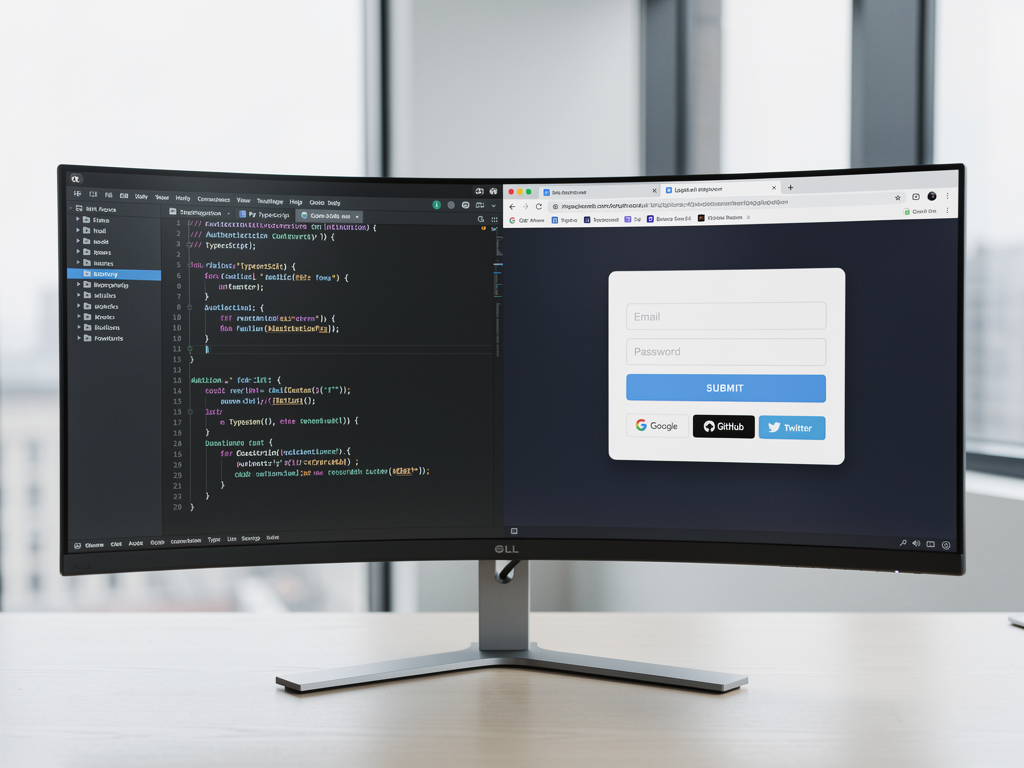
The authentication ecosystem for Next.js applications has evolved dramatically over the past few years. What was once a straightforward choice between rolling your own auth or using NextAuth has expanded into a diverse landscape of options, each with distinct philosophies about how authentication should work in production applications.
Better Auth emerged in 2024 as a response to the limitations developers experienced with existing solutions. Built from the ground up for TypeScript applications, it takes a library-first approach where authentication runs inside your application and writes directly to your database. This means you maintain complete control over your user schema, session management, and data storage location. The library has rapidly gained adoption among teams building production SaaS applications who prioritize ownership and long-term cost predictability.
Clerk, on the other hand, represents the managed service philosophy. Founded with the goal of making authentication effortless, Clerk handles the entire authentication infrastructure on your behalf. You integrate their SDK, use their pre-built components, and let them manage everything from password hashing to session tokens. This approach dramatically reduces initial development time but introduces dependencies on external infrastructure and usage-based pricing that can become significant at scale.
The choice between these approaches isn't simply technical; it's strategic. Teams building a Next.js boilerplate for multi-tenant applications need to consider how their authentication choice affects everything from user data portability to compliance requirements. A SaaS boilerplate that locks you into a specific vendor's ecosystem might accelerate your initial launch but create friction when you need to customize authentication flows or control costs as you grow.
Architecture and Deployment Models Compared
Understanding the fundamental architectural differences between Better Auth and Clerk is essential for making an informed decision. These differences affect not just how you implement authentication but also how you operate, scale, and maintain your application over time.
Better Auth's Self-Hosted Architecture
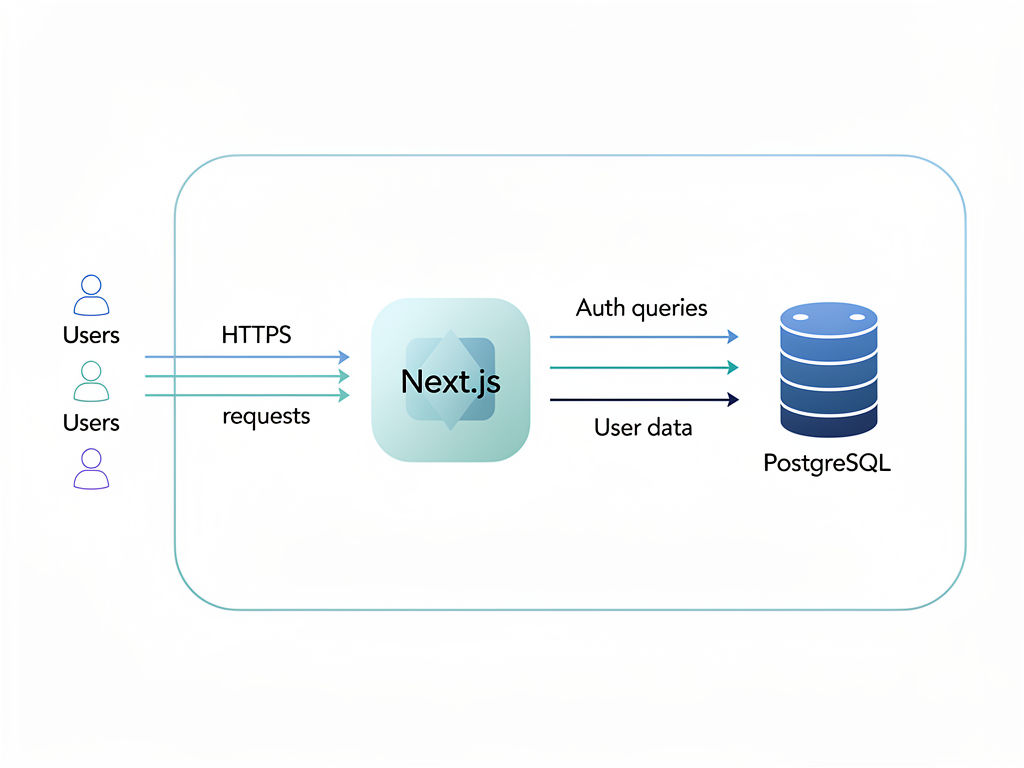
Better Auth operates as a library that you install in your Next.js application. When a user authenticates, the entire process happens within your infrastructure. User credentials are verified against your database, sessions are created and stored in your chosen data store, and tokens are issued by your application servers. This architecture means that Better Auth adds no external dependencies to your authentication flow beyond your existing database and hosting infrastructure.
The self-hosted model provides several advantages for SaaS applications. First, you have complete visibility into authentication operations through your existing monitoring and logging infrastructure. Second, authentication latency is determined by your infrastructure rather than external API calls. Third, you can customize every aspect of the authentication flow, from the database schema to the session handling logic, without waiting for a vendor to add features or approve changes.
Clerk's Managed Service Architecture
Clerk operates as a hosted service where authentication requests are processed by Clerk's infrastructure. When a user signs in, your application communicates with Clerk's APIs to verify credentials, create sessions, and retrieve user information. Clerk maintains the user database, handles password hashing, manages session tokens, and provides the infrastructure for features like multi-factor authentication and social login.
This managed approach offers significant benefits for teams that want to minimize authentication-related development and operations work. Clerk handles security updates, infrastructure scaling, and feature additions without requiring changes to your application code. The pre-built UI components mean you can have a production-quality sign-in experience running within minutes rather than days.
However, the managed model introduces considerations around latency (every auth operation requires external API calls), data residency (user data lives on Clerk's servers), and vendor dependency (your application cannot function without Clerk's service being available).
Feature Comparison for Multi-Tenant SaaS Applications
Multi-tenant SaaS applications have specific authentication requirements that go beyond simple user login. You need to manage organizations, handle role-based permissions, support team invitations, and often provide different authentication options for different tenant tiers. Both Better Auth and Clerk address these needs, but their approaches differ significantly.
Organization and Team Management
Better Auth provides multi-tenancy support through its plugin architecture. The organizations plugin enables you to create workspaces, manage team members, assign roles, and handle invitations. Because this runs within your application, you have complete control over the organization schema and can extend it with custom fields specific to your business logic. For example, if you're building a multi-tenant boilerplate for no-code platforms, you might want to associate subscription tiers, usage limits, or custom branding settings directly with organization records.
Clerk offers built-in organization support as part of their platform, though advanced features like custom roles and permissions are available on paid plans. The advantage here is that Clerk provides a complete admin dashboard for managing organizations, viewing member lists, and handling invitations without you building any admin UI. The tradeoff is that you're working within Clerk's data model rather than defining your own.
Role-Based Access Control
Implementing RBAC is essential for SaaS applications where different users need different levels of access. Better Auth includes RBAC capabilities that let you define custom roles and permissions, then check these permissions throughout your application. Because roles are stored in your database, you can query and report on them using standard database tools and integrate them with your existing authorization logic.
Clerk provides RBAC through their permissions system, which allows you to define roles and check permissions using their SDK. The implementation is straightforward, but customization options are limited compared to a self-hosted solution. If your authorization requirements are complex or need to integrate deeply with your business logic, you may find yourself working around Clerk's constraints rather than implementing exactly what you need.
Authentication Methods Supported
Both solutions support a comprehensive range of authentication methods, though with different levels of built-in support:
| Authentication Method | Better Auth | Clerk |
|---|---|---|
| Email/Password | Yes | Yes |
| Social Login (OAuth) | Yes (20+ providers) | Yes (20+ providers) |
| Magic Links | Yes | Yes |
| Passkeys/WebAuthn | Yes | Yes |
| Two-Factor Authentication | Yes (TOTP) | Yes (TOTP, SMS) |
| Enterprise SSO (SAML) | Plugin available | Paid plans |
| Anonymous Sessions | Yes | Limited |
For teams building a Next.js starter kit that needs to support diverse authentication requirements, Better Auth's plugin system provides flexibility to add authentication methods as needed. Clerk's advantage is that these features work out of the box with minimal configuration, making it faster to implement initially.
Pricing Analysis and Cost at Scale
Pricing is often the deciding factor when choosing between Better Auth and Clerk, particularly for startups and bootstrapped founders who need to manage runway carefully. The pricing models are fundamentally different, and understanding the long-term implications is crucial.
Better Auth's Cost Structure
Better Auth is open source and free to use. Your costs are limited to your existing infrastructure: database hosting, application servers, and any additional services you use. For a typical SaaS application using a managed PostgreSQL database like Supabase or Neon, authentication-related database costs might add $20-50 per month even with hundreds of thousands of users, since user records and session data are relatively lightweight.
The significant advantage here is cost predictability. Whether you have 1,000 users or 1,000,000 users, your authentication costs scale with your infrastructure rather than per-user fees. This makes financial modeling straightforward and eliminates the concern of authentication costs eating into your margins as you grow.
Clerk's Pricing Tiers
Clerk offers a free tier that includes up to 10,000 monthly active users (MAU), which is generous for early-stage applications. Beyond that, pricing is based on MAU with rates that vary by plan:
- Free tier: Up to 10,000 MAU with basic features
- Pro tier: $0.02 per MAU beyond the free tier, plus additional fees for features like custom domains and advanced security
- Enterprise: Custom pricing for large organizations with compliance requirements
At 50,000 MAU, you might pay approximately $800-1,000 per month depending on which features you use. At 100,000 MAU, costs can exceed $1,500 per month. For a SaaS template targeting rapid growth, these costs can become significant and may affect your pricing strategy and unit economics.
Cost Reality Check: Teams that start on Clerk often cite unexpected costs as a primary reason for migration. Features like MFA, custom domains, and organization management that seem included often require paid add-ons that aren't obvious during initial evaluation.

Developer Experience and Integration Complexity
The day-to-day experience of working with an authentication solution matters enormously. Both Better Auth and Clerk have invested heavily in developer experience, but their approaches reflect their different philosophies.
Getting Started with Better Auth
Setting up Better Auth requires more initial configuration than Clerk. You'll need to install the library, configure your database adapter (Prisma or Drizzle are commonly used), set up your authentication options, and create your sign-in and sign-up UI. The process typically takes a few hours for a basic implementation and longer if you're adding features like social login or two-factor authentication.
The configuration is done entirely in TypeScript, which means you get full type safety and IDE autocompletion throughout the setup process. Here's a simplified example of what Better Auth configuration looks like:
The advantage of this approach is that your authentication configuration lives in your codebase, is version controlled, and can be reviewed and tested like any other code. You understand exactly what your authentication system does because you configured every aspect of it.
Getting Started with Clerk
Clerk's setup experience is remarkably streamlined. You create a Clerk account, install the SDK, add your API keys to environment variables, and wrap your application with the ClerkProvider component. Pre-built components like SignIn, SignUp, and UserButton provide complete authentication UI with minimal code.
For teams building a SaaS starter kit that prioritizes speed to market, Clerk's approach is compelling. You can have a fully functional authentication system running in under an hour, complete with social login, email verification, and user profile management. The pre-built components are well-designed and handle edge cases that you might not consider when building custom UI.
The tradeoff is that customization beyond what Clerk's components support requires workarounds or compromises. If your design system doesn't align with Clerk's component styling, or if you need authentication flows that differ from Clerk's assumptions, you may find yourself fighting against the framework rather than working with it.
Next.js App Router Compatibility
Both solutions have adapted to Next.js's App Router architecture, though with different levels of native support. Better Auth works seamlessly with Server Components and Server Actions, allowing you to check authentication status and retrieve user data directly in server-side code. Clerk has also updated their SDK for App Router compatibility, with async helpers that work in Server Components.
For developers building with the latest Next.js patterns, both solutions are viable. The key difference is that Better Auth's server-side operations happen entirely within your application, while Clerk's require API calls to their service, which can affect performance in latency-sensitive applications.
Data Ownership and Vendor Lock-In Considerations
One of the most significant differences between Better Auth and Clerk relates to data ownership and the implications of vendor dependency. For SaaS founders, these considerations extend beyond technical preferences to fundamental business risk management.
Where Does Your User Data Live?
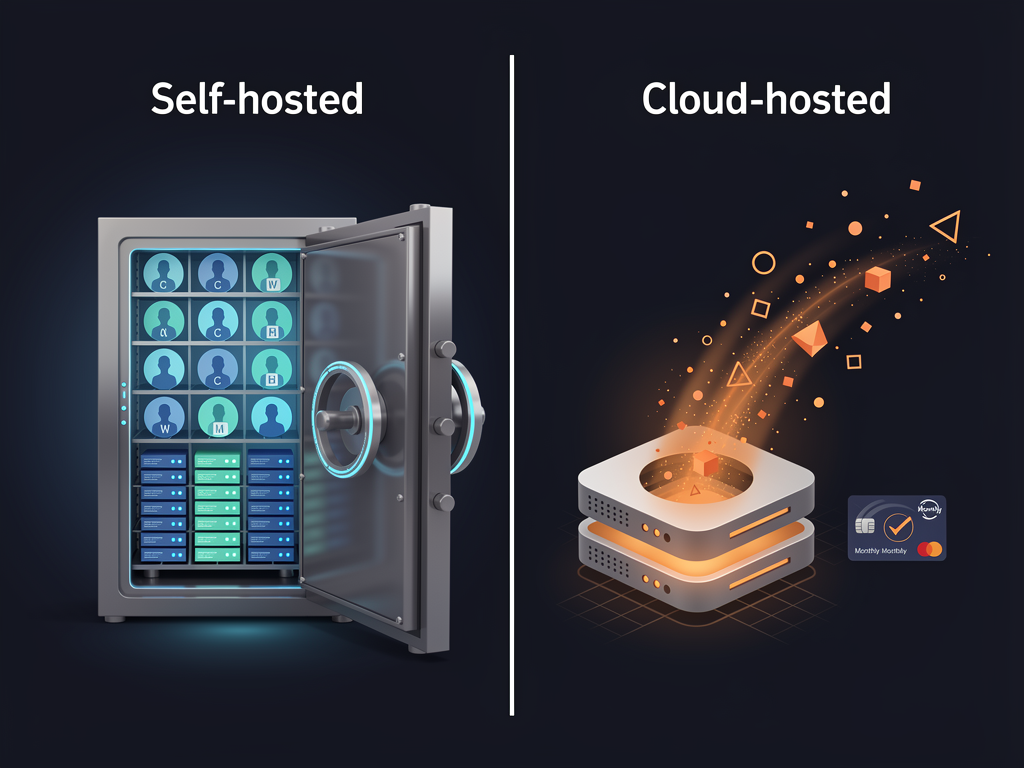
With Better Auth, user data lives in your database. You control the schema, the storage location, and the backup strategy. If you're using a database provider with regional options, you can ensure user data stays within specific geographic boundaries for compliance purposes. You can query user data directly, export it easily, and integrate it with your analytics and business intelligence tools without going through an external API.
With Clerk, user data lives on Clerk's infrastructure, which is primarily US-based. While Clerk provides APIs for accessing and exporting user data, you're dependent on their service for any operations involving user information. This has implications for GDPR compliance, data sovereignty requirements, and business continuity planning.
Migration and Exit Strategy
Consider what happens if you need to change authentication providers. With Better Auth, your user data is already in your database in a schema you control. Switching to a different authentication library or building custom auth is a matter of updating your application code; your user data doesn't need to move.
Migrating away from Clerk is more complex. You'll need to export user data through their APIs, handle password migration (since you don't have access to password hashes), and update all authentication flows in your application. Teams that have gone through this process report it taking weeks to months depending on application complexity.
Strategic Consideration: If you're building a platform that might be acquired, investors and acquirers often prefer applications where critical infrastructure like authentication is self-contained rather than dependent on external services with ongoing costs and potential availability risks.
Security Considerations and Compliance
Authentication is a security-critical component of any application, and both Better Auth and Clerk take security seriously. However, their approaches to security and compliance differ in ways that matter for different types of applications.
Security in Self-Hosted Authentication
With Better Auth, security responsibility falls primarily on your team. You're responsible for keeping the library updated, securing your database, implementing proper session management, and following security best practices. The advantage is that you have complete visibility into your security posture and can implement security measures specific to your requirements.
Better Auth implements modern security practices by default, including secure password hashing, CSRF protection, and secure session handling. The library is actively maintained with security updates released promptly when vulnerabilities are discovered. For teams with security expertise, this model provides the control needed to meet specific security requirements.
Security in Managed Authentication
Clerk handles security infrastructure on your behalf, including security monitoring, incident response, and compliance certifications. They maintain SOC 2 Type II compliance and implement security measures that would be expensive for individual teams to replicate. For applications that need to demonstrate security compliance to enterprise customers, Clerk's certifications can accelerate sales cycles.
The tradeoff is that you're trusting Clerk with your users' authentication credentials and relying on their security practices. While Clerk has a strong security track record, any security incident on their platform affects all their customers simultaneously. You also have limited visibility into security operations beyond what Clerk chooses to disclose.
Compliance and Regulatory Requirements
For applications subject to specific compliance requirements (HIPAA, GDPR, SOC 2), the choice between Better Auth and Clerk depends on your specific situation:
- GDPR: Better Auth's self-hosted model makes data residency straightforward; you control where data is stored. Clerk's US-based infrastructure requires additional consideration for EU data subjects.
- HIPAA: Neither solution is HIPAA-compliant out of the box. Better Auth gives you control to implement required safeguards; Clerk would require a Business Associate Agreement and may not be suitable for all HIPAA use cases.
- SOC 2: Clerk's existing SOC 2 certification can help demonstrate compliance. With Better Auth, your SOC 2 compliance depends on your overall infrastructure and practices.
Performance and Scalability Patterns
Authentication performance affects every user interaction with your application. Slow authentication can frustrate users, while authentication that doesn't scale can bring down your entire platform during traffic spikes.
Better Auth Performance Characteristics
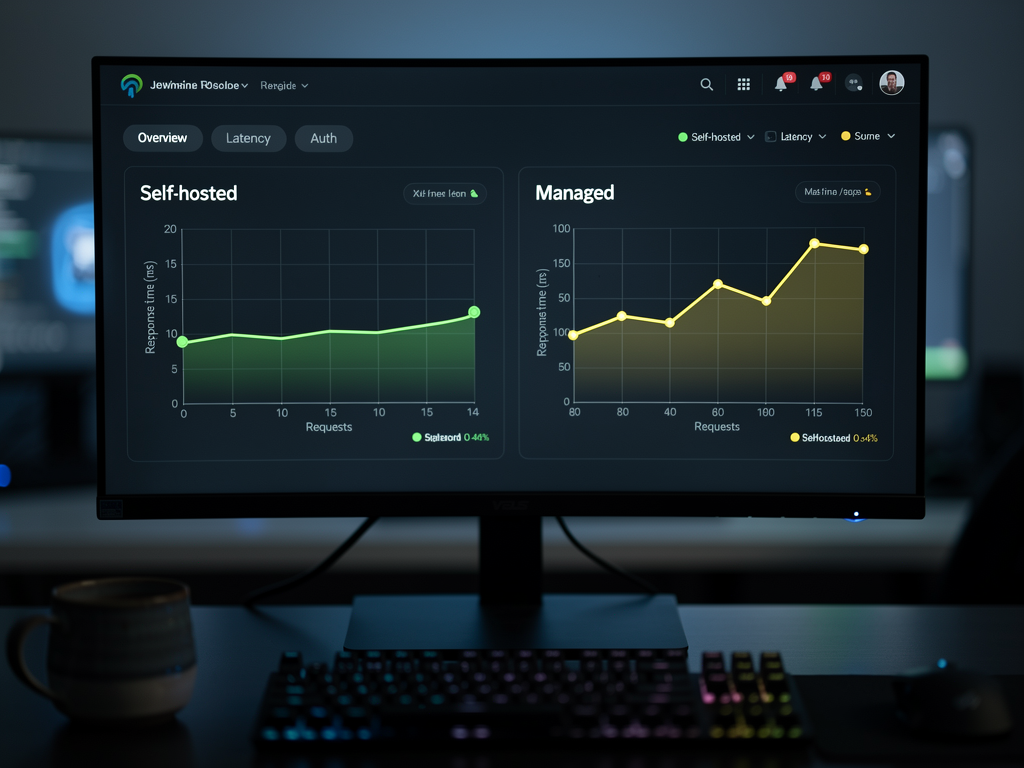
Because Better Auth runs within your application, authentication performance is determined by your infrastructure. Session validation happens locally, typically requiring only a database lookup or cache check. This means authentication latency can be measured in single-digit milliseconds for well-optimized deployments.
Scaling Better Auth follows the same patterns as scaling your application generally. If you're using a managed database with connection pooling and appropriate indexing, authentication operations scale with your database capacity. For high-traffic applications, implementing session caching with Redis or similar can reduce database load significantly.
Clerk Performance Characteristics
Clerk authentication operations require API calls to Clerk's infrastructure. While Clerk has invested in global edge infrastructure to minimize latency, you're adding network round-trips to every authentication operation. In practice, this might add 50-200ms to authentication-related requests depending on user location and network conditions.
For most applications, this latency is acceptable. However, for applications where authentication happens frequently (such as checking permissions on every API request) or where users are in regions far from Clerk's infrastructure, the cumulative latency impact can affect user experience.
Clerk handles scaling on their end, which is a significant advantage for teams that don't want to manage authentication infrastructure. You don't need to worry about database capacity for user records or session storage; Clerk handles this automatically as your user base grows.
Integration with Multi-Tenant Platform Features
Building a multi-tenant SaaS platform requires authentication that integrates seamlessly with tenant isolation, custom domains, and white-label capabilities. Both Better Auth and Clerk can support these requirements, but implementation approaches differ.
Custom Domain Authentication
For platforms where each tenant has their own subdomain or custom domain, authentication needs to work seamlessly across these domains. Better Auth, running within your application, naturally supports whatever domain configuration your application uses. You control cookie domains, CORS settings, and redirect URLs directly in your code.
Clerk supports custom domains as a feature, but configuration is done through their dashboard and may require paid plans for full functionality. The implementation is generally straightforward, but you're working within Clerk's constraints rather than implementing exactly what your platform needs.
White-Label Authentication
If you're building a platform where clients want their own branding on authentication screens, Better Auth provides complete flexibility. You build the authentication UI yourself, so it can match any design system or branding requirements. This is particularly valuable for agencies building white-label SaaS solutions where each client expects a fully branded experience.
Clerk's pre-built components can be themed to some extent, but achieving a fully white-labeled experience may require their embedded components or custom implementation that reduces the benefits of using Clerk's pre-built UI.
Tenant-Specific Authentication Rules
Different tenants in your platform might have different authentication requirements. Enterprise tenants might require SSO, while smaller tenants use email/password. Some tenants might mandate two-factor authentication while others don't.
With Better Auth, implementing tenant-specific authentication rules is a matter of writing the logic in your application code. You can check tenant settings and enforce appropriate authentication requirements at each step of the authentication flow.
Clerk supports some tenant-specific configuration through their organizations feature, but complex conditional logic may require workarounds or may not be possible within their framework.
Real-World Implementation Scenarios
To make this comparison concrete, let's examine how Better Auth and Clerk would work in specific SaaS scenarios that are common among NextBuilder users.
Scenario: No-Code Platform Builder
Imagine you're building a platform where clients can create their own no-code applications, each with custom subdomains and their own user bases. This is exactly the type of application that a Next.js SaaS template like NextBuilder is designed to support.
With Better Auth, you would implement a dual authentication system: one for platform users (your clients who build apps) and one for app members (the end users of your clients' apps). Both authentication systems run in your application, sharing infrastructure but maintaining separate user pools. You have complete control over how these systems interact and can implement features like platform admin impersonation of app users for support purposes.
With Clerk, you would use their organizations feature for platform-level authentication and potentially a separate Clerk application or custom implementation for app member authentication. The complexity of managing multiple authentication contexts within Clerk's framework can become challenging, and costs multiply if you're paying per-user for both platform users and app members.
Scenario: Agency Building Client Portals
Consider an agency that builds custom client portals, each requiring authentication but with different branding and potentially different authentication methods based on client requirements.
Better Auth's flexibility shines here. Each client portal can have completely custom authentication UI matching their brand, different authentication methods enabled based on their requirements, and integration with their existing identity providers if needed. The agency maintains one codebase with configuration-driven customization.
Clerk would require careful management of multiple Clerk applications or extensive theming work to achieve similar results. The per-user pricing across multiple client portals could also become significant as the agency's client base grows.
Migration Paths and Transition Strategies
Whether you're starting fresh or considering a migration from an existing authentication solution, understanding the transition paths is important for planning purposes.
Migrating from NextAuth to Better Auth
Many teams currently using NextAuth (Auth.js) are evaluating Better Auth for its more comprehensive feature set and active development. The migration involves updating your authentication configuration, potentially adjusting your database schema, and updating authentication calls throughout your application. Because both are self-hosted libraries, user data doesn't need to move; you're primarily updating how authentication logic works.
Better Auth provides migration guides and the community has documented common migration patterns. The process typically takes a few days to a week depending on how extensively authentication is integrated into your application.
Migrating from Clerk to Better Auth
This migration is more complex because you're moving from a managed service to a self-hosted solution. Key challenges include:
- User data export: You'll need to export user data from Clerk and import it into your database.
- Password handling: Clerk doesn't expose password hashes, so users will need to reset passwords or you'll need to implement a gradual migration strategy.
- OAuth connections: Social login connections need to be re-established, which may require users to re-link their accounts.
- Session migration: Active sessions will be invalidated, requiring users to log in again.
Teams that have completed this migration report it taking several weeks to months, with careful planning needed to minimize user disruption.
Starting Fresh with Better Auth
For new projects, starting with Better Auth means investing more time upfront in exchange for long-term flexibility and cost control. The initial setup takes longer than Clerk, but you avoid potential migration costs later and have complete control from day one.
Using a SaaS boilerplate that already has Better Auth integrated, like NextBuilder's multi-tenant platform template, can significantly reduce this initial investment while still giving you the benefits of self-hosted authentication.
Community, Support, and Long-Term Viability
The sustainability and support ecosystem around an authentication solution matters for long-term projects. Both Better Auth and Clerk have active communities, but their support models differ.
Better Auth Community and Support
Better Auth has a rapidly growing open-source community with active GitHub discussions, Discord channels, and community-contributed plugins. The library is actively maintained with frequent releases addressing bugs, adding features, and improving documentation. As an open-source project, you can inspect the code, contribute fixes, and fork if necessary.
Support is primarily community-based, which works well for most issues but may not meet the needs of enterprises requiring guaranteed response times. The documentation is comprehensive and improving continuously as the community grows.
Clerk Support and Enterprise Features
Clerk offers professional support as part of their paid plans, with guaranteed response times for enterprise customers. They have dedicated documentation, tutorials, and a support team that can help with implementation challenges. For teams that need vendor-backed support, this is a significant advantage.
As a venture-backed company, Clerk has resources for continued development and support. However, this also means their pricing and feature availability are subject to business decisions that may not always align with customer interests.

Making the Right Choice for Your Project
After examining both solutions in depth, the choice between Better Auth and Clerk comes down to your specific priorities, constraints, and long-term vision for your product.
Choose Better Auth If:
- You're building a multi-tenant SaaS platform where per-user costs would significantly impact your business model
- Data ownership and residency are important for your compliance requirements or business strategy
- You need extensive customization of authentication flows, UI, or data models
- You're comfortable with slightly more initial setup in exchange for long-term flexibility
- You want to avoid vendor lock-in and maintain the ability to modify or migrate your authentication system
- You're using a modern Next.js stack and want TypeScript-native authentication
Choose Clerk If:
- Speed to market is your top priority and you need authentication working in hours, not days
- You prefer managed services and want to minimize operations and maintenance work
- Your user base will stay under 50,000 MAU for the foreseeable future, keeping costs manageable
- You need enterprise compliance certifications (SOC 2) immediately for sales purposes
- Your team lacks authentication expertise and you want a solution that handles security best practices automatically
- Pre-built UI components align well with your design requirements
Hybrid Approaches
Some teams start with Clerk for rapid prototyping and plan to migrate to Better Auth once they've validated their product and need to optimize costs. This approach can work but requires planning for the migration effort and potential user disruption. If you're considering this path, document your authentication requirements thoroughly from the start to make the eventual migration smoother.
Implementation Best Practices
Regardless of which solution you choose, following authentication best practices will help you build a secure, maintainable system.
Security Best Practices
Always use HTTPS in production, implement proper CSRF protection, and use secure cookie settings. For Better Auth, ensure your database connections are encrypted and your hosting environment is properly secured. For Clerk, verify that your API keys are stored securely and not exposed in client-side code.
Implement rate limiting on authentication endpoints to prevent brute force attacks. Both Better Auth and Clerk provide mechanisms for this, but you may need additional infrastructure-level protection for high-traffic applications.
User Experience Best Practices
Provide clear error messages that help users resolve authentication issues without revealing security-sensitive information. Implement proper session management with appropriate timeout policies. Consider implementing "remember me" functionality for convenience while maintaining security.
For multi-tenant applications, ensure that authentication errors don't leak information about which tenants exist or which users are registered on other tenants.
Monitoring and Observability
Implement logging for authentication events including successful logins, failed attempts, password resets, and session management operations. This data is valuable for security monitoring, debugging user issues, and understanding user behavior.
Set up alerts for unusual authentication patterns that might indicate attacks or system issues. Both Better Auth and Clerk can integrate with standard monitoring tools, though the implementation details differ.
Future Trends in SaaS Authentication
The authentication landscape continues to evolve, and understanding emerging trends can help you make a choice that remains relevant as technology advances.
Passkeys and Passwordless Authentication
Passkeys are becoming increasingly important as major platforms (Apple, Google, Microsoft) push for passwordless authentication. Both Better Auth and Clerk support passkeys, positioning them well for this transition. For new applications, implementing passkey support from the start can improve security and user experience.
Decentralized Identity
Web3 and decentralized identity standards are emerging but not yet mainstream for most SaaS applications. Better Auth's plugin architecture makes it well-positioned to support these standards as they mature. Clerk has shown interest in this space but hasn't made significant moves yet.
AI and Authentication
AI-powered fraud detection and adaptive authentication are becoming more sophisticated. Managed services like Clerk may have advantages in implementing these features due to their visibility across many applications. Self-hosted solutions like Better Auth can integrate with third-party fraud detection services but require more implementation work.
Conclusion
Choosing between Better Auth and Clerk is ultimately a decision about what tradeoffs align best with your project's needs and your team's capabilities. Better Auth offers ownership, flexibility, and cost predictability at the expense of more initial setup work. Clerk offers speed, convenience, and managed infrastructure at the expense of ongoing costs and vendor dependency.
For teams building serious multi-tenant SaaS applications, particularly those using platforms like NextBuilder to accelerate development, Better Auth's self-hosted approach often makes more sense. The initial investment in setup pays dividends through lower long-term costs, complete customization flexibility, and the peace of mind that comes with owning your authentication infrastructure.
For rapid prototypes, weekend projects, or applications where authentication complexity is low and user counts will remain modest, Clerk's managed approach can be the right choice. The key is making this decision consciously, understanding the implications, and planning accordingly.
Whatever you choose, remember that authentication is foundational infrastructure. Taking time to evaluate your options thoroughly now will save significant effort and cost compared to migrating later when you have thousands of users depending on your platform.

Frequently Asked Questions
Can I switch from Clerk to Better Auth after launching my SaaS?
Yes, migration from Clerk to Better Auth is possible, though it requires careful planning. The main challenges involve exporting user data from Clerk, handling password migration (since Clerk doesn't expose password hashes), and re-establishing OAuth connections. Most teams implement a gradual migration strategy where new users are created in Better Auth while existing users are prompted to reset passwords or re-authenticate during their next login. The process typically takes several weeks for a production application, and you should plan for some user friction during the transition. Teams report that the long-term benefits of lower costs and greater control justify the migration effort, but starting with Better Auth from the beginning is preferable if you anticipate needing its advantages.
How does Better Auth handle session management compared to Clerk?
Better Auth provides full control over session management, allowing you to configure session duration, storage mechanism (database or JWT), refresh token behavior, and multi-device session handling. You can implement custom session validation logic, such as invalidating sessions when user permissions change or when suspicious activity is detected. Clerk manages sessions on their infrastructure with configurable but limited options. Their sessions are stored on Clerk's servers and validated through API calls. For most applications, both approaches work well, but Better Auth's flexibility is valuable for applications with specific session requirements, such as financial applications requiring short session timeouts or collaboration tools needing real-time session synchronization across devices.
What happens to my application if Clerk experiences downtime?
If Clerk's service is unavailable, authentication operations in your application will fail. Users won't be able to log in, and depending on your implementation, existing sessions may not validate correctly. Clerk has strong uptime historically, but any external dependency introduces availability risk. With Better Auth, authentication availability depends on your own infrastructure. If your database and application servers are running, authentication works. This gives you more control over your application's availability and allows you to implement redundancy strategies that align with your specific requirements. For mission-critical applications, the self-hosted approach eliminates a potential single point of failure that's outside your control.
Is Better Auth suitable for enterprise applications requiring compliance certifications?
Better Auth can absolutely support enterprise applications, but compliance certification depends on your overall infrastructure and practices rather than the authentication library itself. Since Better Auth runs in your environment, your SOC 2 or HIPAA compliance encompasses your authentication system naturally. You have complete control over security measures, audit logging, and data handling practices. Clerk's existing SOC 2 certification can accelerate compliance demonstrations for their portion of your stack, but you're still responsible for your application's overall compliance. For enterprises with strict data residency requirements or specific security controls, Better Auth's self-hosted model often provides more flexibility to meet exact requirements than a managed service with fixed infrastructure.
How do the two solutions compare for implementing social login with multiple providers?
Both Better Auth and Clerk support extensive social login options including Google, GitHub, Apple, Microsoft, and many others. Better Auth requires you to configure OAuth credentials for each provider and implement the callback handling, giving you control over the user data you collect and how accounts are linked. Clerk provides a dashboard-based configuration where you add OAuth credentials and their SDK handles the rest. For rapid implementation, Clerk is faster. For customization, such as requiring specific OAuth scopes, implementing custom account linking logic, or handling provider-specific edge cases, Better Auth provides more flexibility. Both solutions support adding new providers as your requirements evolve, though Better Auth's plugin system makes it easier to add providers that aren't officially supported.
What's the learning curve difference between Better Auth and Clerk for a team new to authentication?
Clerk has a gentler initial learning curve because much of the complexity is abstracted away. You can have working authentication without deeply understanding session management, token handling, or security best practices. Better Auth requires more upfront learning about authentication concepts, but this knowledge becomes valuable as your application grows and you need to customize or debug authentication behavior. For teams building a single simple application, Clerk's abstraction is beneficial. For teams building multiple applications or complex multi-tenant platforms, investing in understanding Better Auth pays off through better debugging capabilities, easier customization, and the ability to implement exactly what your application needs rather than working within the constraints of a managed service.
Ready to Build Your Multi-Tenant SaaS Platform?
If you're building a no-code platform, client portal system, or any multi-tenant SaaS application, NextBuilder provides a complete foundation with authentication already integrated. Our production-ready boilerplate includes dual authentication systems for platform users and app members, multi-tenant architecture with custom subdomains and SSL, and all the features you need to launch in days instead of months. Explore NextBuilder's features and see how you can skip months of development work while maintaining complete control over your authentication infrastructure.
Subscribe to our newsletter
Subscribe to our newsletter and stay up-to-date with the latest news and updates.